Bats Carry Viruses That Should Kill Them, and Science Just Found Another Piece of the Answer
More than 500 species of vesper bat turn out to carry two separate sets of antibody heavy chain genes, where every other known mammal has one. The researchers are careful to say this does not fully explain why bats tolerate viruses.
Friday, September 4, 2026/3 min read
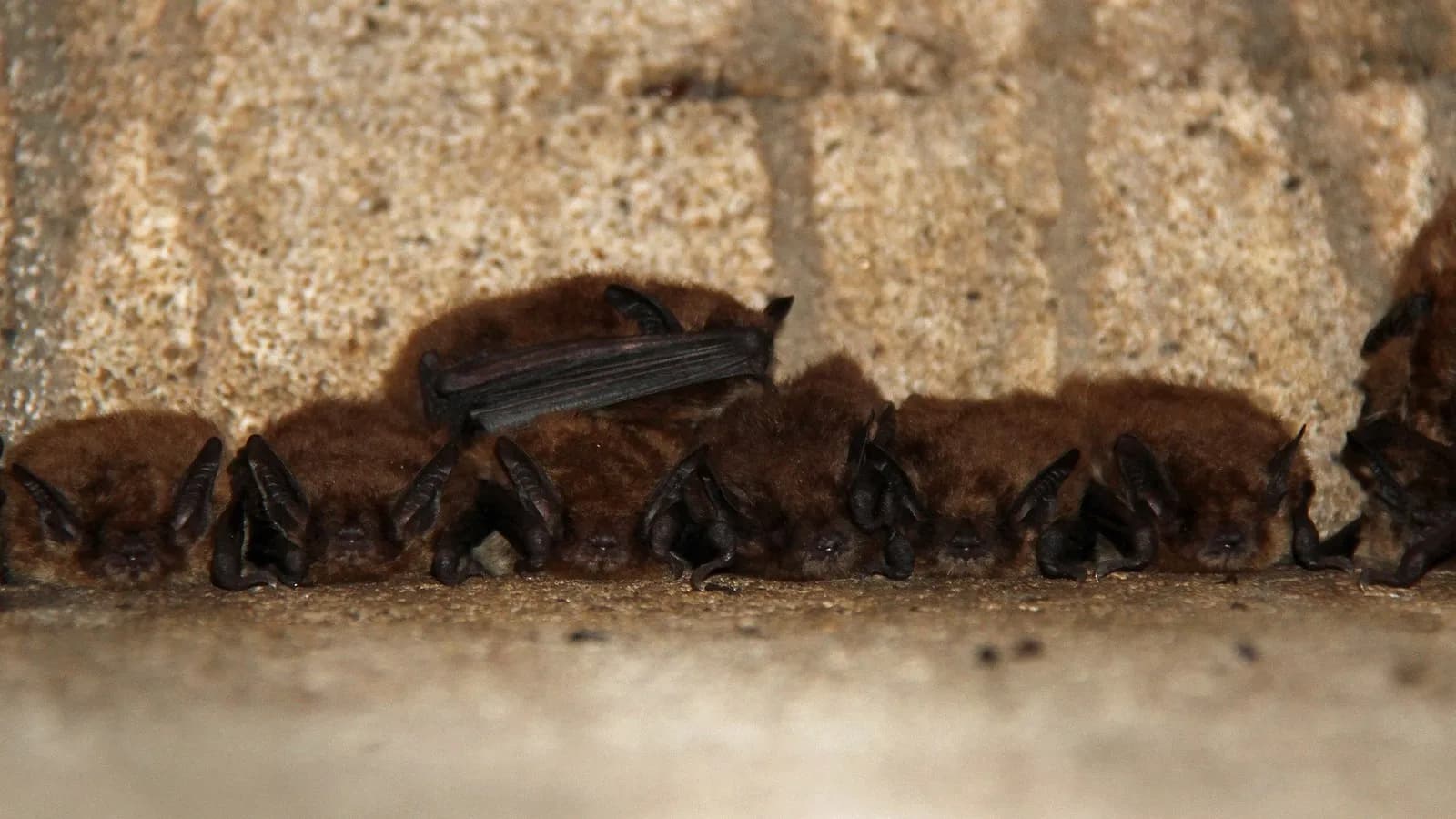
Bats carry an extraordinary number of viruses that would make other mammals extremely ill, and they mostly do not get extremely ill. Why has been an open question for decades, and it is not an academic one, since several of the diseases that have reshaped the last twenty years of public health have their reservoirs in bats.
A paper published in Science Advances on Wednesday adds a genuinely new piece to it.
The finding
More than 500 species of vesper bat carry two separate sets of antibody heavy chain genes.
Every other mammal that has been looked at, humans included, builds the heavy chain of an antibody from a single set of genes. Vesper bats, the large family that includes most of the ordinary small insect eating bats of Europe and North America, have two distinct copies of that machinery.
The work came from a team at Tulane University with collaborators at Stanford and the United States Centers for Disease Control and Prevention, and the immediate reaction of the lead author, Tulane associate professor Hannah Frank, was that nobody has seen anything like it in a mammal before.
Why two sets could matter
Because antibody production involves a trade off, and two systems allow you to sit on both sides of it.
An immune system generating antibodies has to choose, roughly, between depth and breadth. It can refine a small number of antibodies until they fit one target very tightly, which is what gives you durable protection against a specific pathogen. Or it can produce a wider range that recognise many targets loosely, which is what gives you a fast, rough response to something unfamiliar.
Having two independent gene systems offers a route to doing both at once rather than trading one against the other. For an animal that hosts a large and shifting population of viruses without clearing them all, a permanent broad response alongside a targeted one is a plausible way to live with infection rather than fight it to a conclusion.
The caveat the researchers put in themselves
This is the part most coverage of the study has skipped, and it is the part the authors were most careful about.
The discovery does not fully explain why bats are such effective viral reservoirs. Frank described it as an important piece of the puzzle and as revealing a level of immune variety that was not known to exist, which is a considerably more modest claim than the one implied by a headline about a secret immune system.
What has been established is structural: the genes are there, in a arrangement not previously found in any mammal. What has not been established is that this arrangement is the reason for viral tolerance. Bats also run unusually hot in flight, have distinctive inflammatory signalling, and are unusually long lived for their size, and every one of those has been proposed as an explanation at some point. The honest position is that tolerance is probably several mechanisms rather than one, and this is now a candidate among them.
Why it is worth following anyway
Because an immune strategy that no mammal was known to use is interesting on its own terms, whatever it turns out to explain.
Understanding how an animal coexists with viruses that harm us is one of the more direct routes into both pandemic preparedness and the design of broadly protective vaccines, which face exactly the depth against breadth problem described above. A natural system that appears to have solved it twice over is worth studying regardless of whether it is the whole answer to the original question.
The study is Pursell and colleagues, published in Science Advances on 3 September 2026 under the DOI 10.1126/sciadv.aeb6714, and a readable summary of the work is available from ScienceDaily.
Related work on how immune cells behave where they were not previously expected is in our piece on immune cells crossing into the ageing brain, and the recent finding on immune memory and obesity is in this report.
One last note on how to read studies like this one. A finding that a mechanism exists is a much smaller claim than a finding that the mechanism is responsible, and the distance between those two is usually years of further work. The researchers here drew that line clearly. It is worth holding them to their own standard rather than the one the coverage supplies.
Published in The Outspoken Digest
Editorial desk
Outspoken Digest Health DeskMedicine, public health and the research behind the headlines, read carefully.
Newsletter
The Digest, in your inbox
One edition, sent when it is ready. No noise, and your address is never passed on.
Read Next
More Health →
Cochrane Review Finds Medical Cannabis Has No Clear Benefit for Insomnia, With Weak Evidence Either Way
Oct 13, 2026/2 min read

Lancet Commission Names 17 Threats to Global Health Through 2100, With Obesity the Largest by Burden
Oct 12, 2026/2 min read


FDA Approves Pritelivir for Herpes Lesions That Resist Standard Antivirals in Immunocompromised Adults
Oct 10, 2026/2 min read