The Oldest Written Hummus Recipe Is Egyptian, From a Cookbook Roughly Seven Hundred Years Old
It contains four things and one of them is not optional. The supermarket version usually gets the ratio wrong, the ownership argument is genuinely political, and the earliest written record does not point where most people expect.
Friday, August 21, 2026/3 min read
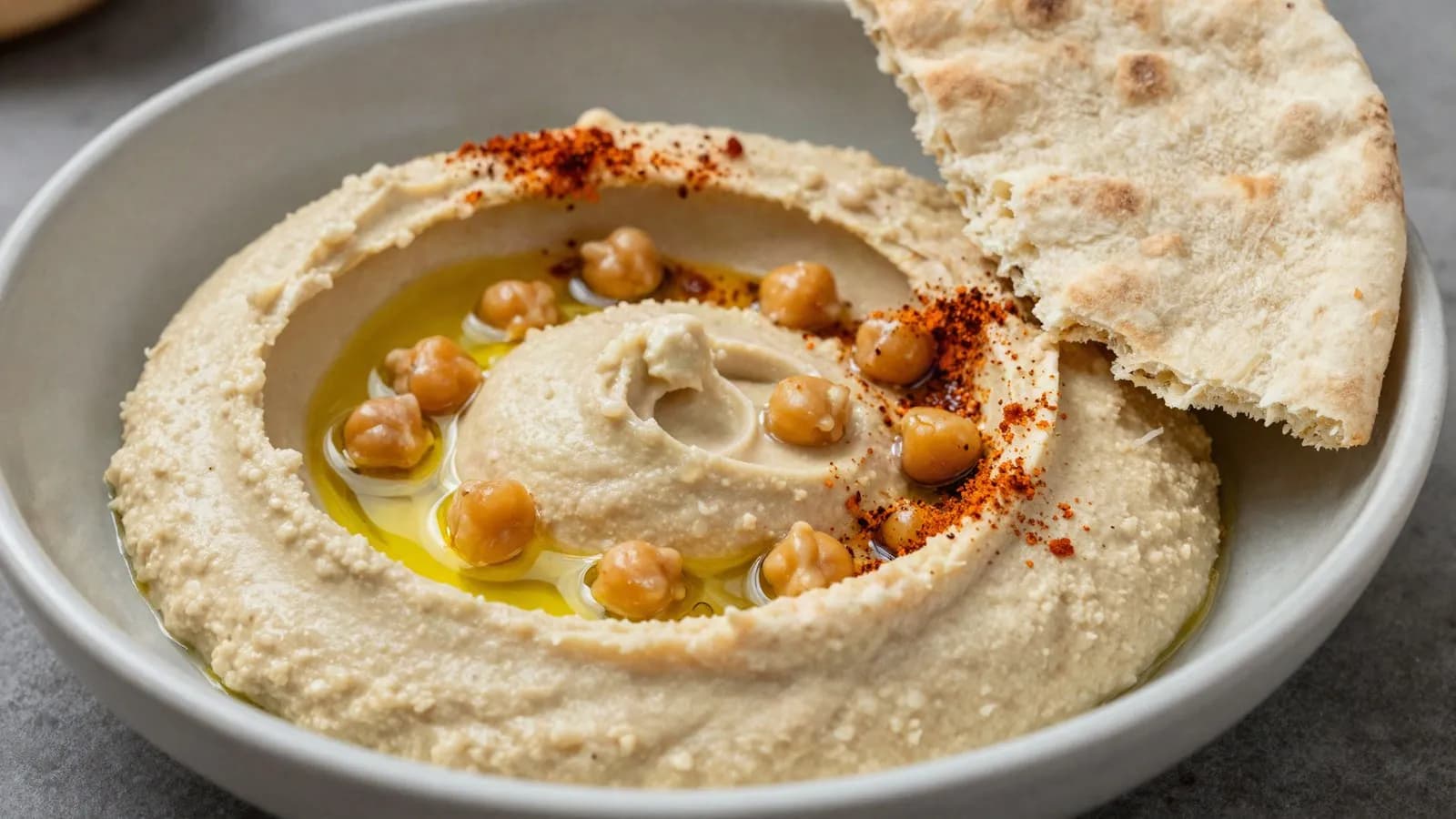
Hummus is now a supermarket staple in dozens of countries that had never heard of it forty years ago, sold in tubs alongside variations involving beetroot, sweet potato and, at the far end, chocolate.
The word itself is the first correction worth making. Hummus is simply the Arabic for chickpea. The dish is hummus bi tahina, chickpeas with tahini, and that second half is not a garnish.
What is in real hummus?
Four things, plus salt, and the proportions matter more than the list.
- Chickpeas, cooked until genuinely soft rather than merely tender.
- Tahini, in a quantity most commercial versions would consider reckless.
- Lemon juice.
- Garlic, usually raw, usually restrained.
Olive oil goes on top at the end, not into the blend. Cumin is common and not universal. Anything beyond that is a variation rather than a foundation.
The single biggest difference between hummus made in the Levant and hummus made in a factory is the tahini ratio. Sesame paste is expensive and chickpeas are cheap, so industrial recipes cut the tahini and compensate with oil, water and acidity. The result is paler, blander and thinner in the mouth, and it is why people who have only had the tub version find the real thing startlingly rich.
Where does hummus come from?
The earliest written evidence points to Egypt, several centuries ago, and beyond that the record thins out quickly.
A dish closely resembling modern hummus appears in a thirteenth century Cairo cookbook under a name transliterated as hummus kasa. A related record for pounded chickpeas, himmas kassa, appears in the fourteenth century Egyptian collection Kanz al-Fawa'id fi Tanwi al-Mawa'id.
Two honest caveats. Written records show where something was written down, not where it was invented, and a dish of mashed chickpeas is simple enough that it may well have existed in many places before anyone recorded it. Claims of far greater antiquity, including the ones that reach for classical antiquity, are not supported by the texts people cite for them.
Why is the ownership so contested?
Because it stopped being a question about food some time ago.
Lebanon, Israel, Syria, Palestine, Egypt, Greece and Turkey all have populations for whom this is an everyday dish with deep family associations. Where national identity is contested, the food of that identity gets contested with it, and hummus has been the subject of commercial disputes, record-breaking stunts and repeated political flashpoints.
The defensible position is narrow and worth stating plainly. Chickpeas and sesame have been cultivated across the eastern Mediterranean and the Levant for a very long time. The earliest written recipes are Egyptian. The dish as it is eaten now is Levantine in its technique and its culture. Those statements are compatible, and the intensity of the argument reflects politics rather than a gap in the evidence, exactly as it does with falafel.
What makes it smooth?
Three things, and blending harder is not one of them.
Overcook the chickpeas. Well past the point you would want to eat one whole. A chickpea that still has structure will not disappear into the paste, and no blender fixes that.
Consider peeling them, or use a pinch of bicarbonate of soda in the cooking water to help the skins slip. The skins are the main source of grit.
Use ice water. Cold water whipped into the tahini and lemon before the chickpeas go in produces a paler, lighter, mousse-like texture. It is the single technique that separates restaurant hummus from home hummus, and it costs nothing. Our Lebanese hummus technique piece goes through it properly.
Is it actually healthy?
Genuinely, with one honest qualification.
It carries plant protein and fibre from the chickpeas, and unsaturated fat, calcium and minerals from the tahini. Eaten with vegetables or bread it is a straightforwardly good thing to have in a fridge.
The qualification is that it is calorie dense, because tahini is fat. That is not a reason to buy the low-fat version, which achieves its number by removing the tahini, which is to say by removing the hummus. It is a reason to treat it as a substantial food rather than a free one.
If you eat it often, the ingredient worth understanding is the sesame paste doing most of the work, covered in what tahini actually is.
Published in The Outspoken Digest
Editorial desk
Outspoken Digest Food DeskCooking, ingredients, restaurants and the economics of what ends up on the table.
Newsletter
The Digest, in your inbox
One edition, sent when it is ready. No noise, and your address is never passed on.
Read Next
More Recipes →
Cheesy Ramen on the Stove: Instant Noodles in a Real Cheese Sauce in Ten Minutes
Oct 18, 2026/3 min read
Beer-Battered Jalapeno Cheese Curds: The Wisconsin Bar Snack, Fried Properly at Home
Oct 18, 2026/3 min read
A Thanksgiving Turkey Sub With Hot Stuffing, Cranberry and Gravy to Dip
Oct 17, 2026/3 min read

Pecan Pie Bars With a Shortbread Base and a Caramel Filling That Slices Cleanly
Oct 17, 2026/3 min read