Tahini Is One Ingredient, and the Jar in Your Cupboard Is Probably the Wrong One
Ground sesame, nothing else. Whether it is hulled or unhulled changes the taste completely, the bitterness people complain about is usually a sign of the cheap kind, and the trick that stops it seizing is counterintuitive.
Friday, August 21, 2026/3 min read
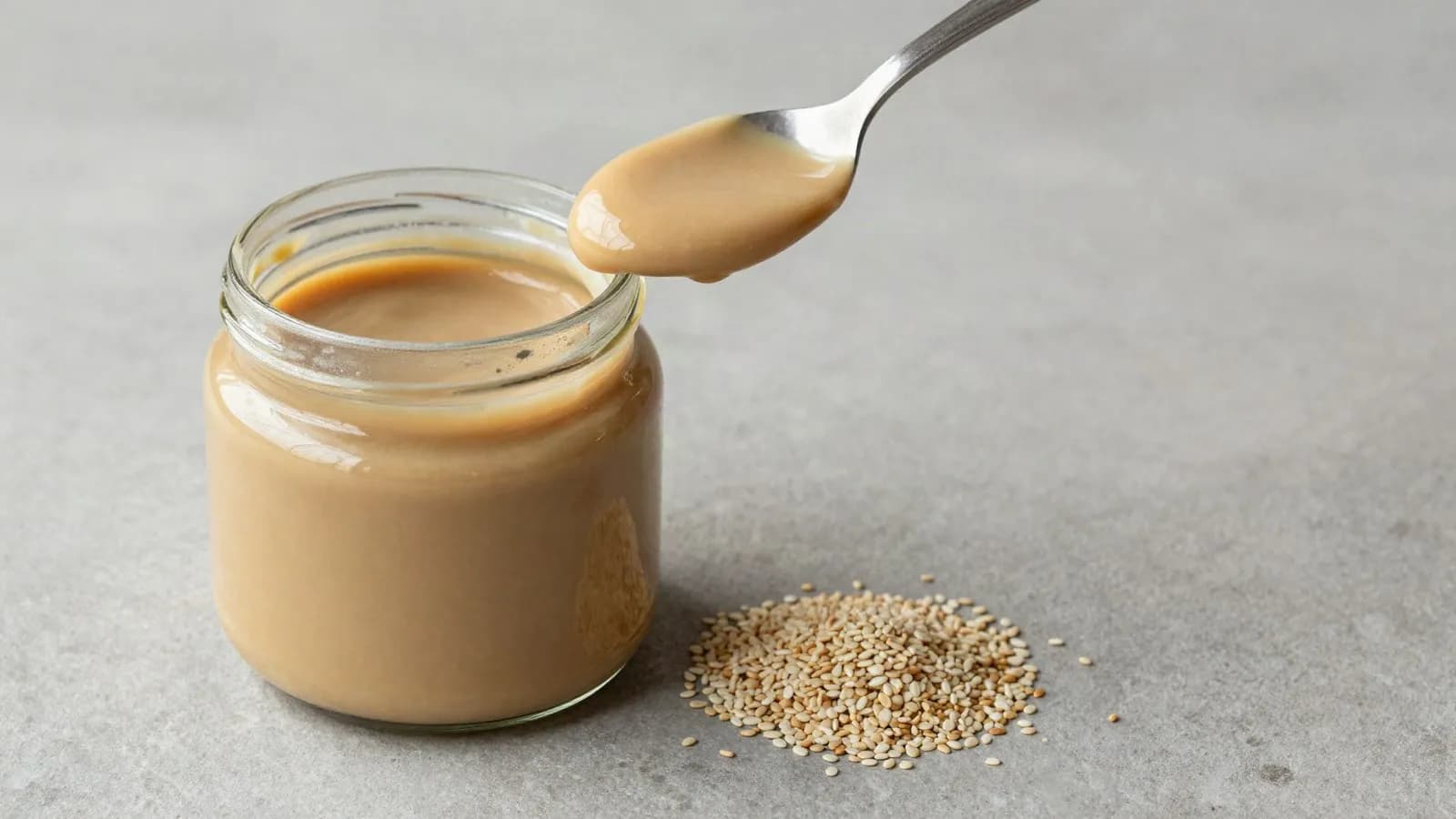
Tahini has made an odd journey. For most of its life it was an unremarkable staple in Levantine, Turkish, Greek and North African kitchens, sitting in a tin next to the olive oil. In the last decade it has been rebranded in Western supermarkets as something between a health food and a novelty, and priced accordingly.
It is neither. It is ground sesame seeds, and understanding two variables tells you almost everything about why one jar is delicious and another tastes like chewing an aspirin.
What is tahini made from?
Sesame seeds, ground into a paste. That is the entire ingredient list in a good jar.
The seeds are usually hulled to remove the outer shell, roasted to develop flavour, then ground until the oil releases and the mass turns fluid. Nothing is added. A jar listing palm oil, sugar, emulsifiers or thickeners is a sesame product rather than tahini, and it will behave differently in every recipe.
Why does some tahini taste bitter?
Two causes, and they are worth being able to tell apart.
Unhulled seeds. Tahini made from whole seeds with the hull left on is darker, more assertive and noticeably more bitter. It also carries more of the minerals concentrated in the hull. It is not defective, it is a different product, and it is the wrong choice for hummus where you want smoothness and restraint.
Rancidity. Tahini is mostly unsaturated fat and it does go off. Old tahini develops a sharp, dusty bitterness that does not soften when you add lemon or salt. Since a jar lasts most households months, this is the more common of the two problems. Keep it somewhere cool, and once opened the fridge is not a bad idea despite what it does to the texture.
For hummus, dressings and halva, hulled tahini is what you want. Look for a pale, sandy colour and a pourable consistency once stirred.
Why does it seize when I add water?
Because it is doing exactly what it should, and most people give up one step too early.
Add a little water or lemon juice to tahini and it will immediately thicken, clump and look ruined. That is the emulsion inverting: the paste is going from oil-continuous to water-continuous, and mid-transition it stiffens dramatically.
The answer is to keep going. Add more liquid, a splash at a time, whisking hard. It will loosen abruptly and turn pale, glossy and pourable. Ice-cold water gives the smoothest, lightest result, which is the same trick that makes restaurant hummus lighter than the home version.
Thinned this way with lemon, garlic and salt it becomes tarator, the sauce that goes over falafel, grilled fish and roast vegetables.
Is tahini good for you?
It is a genuinely nutrient-dense fat, and the calcium point is the one usually overstated.
Sesame is a good source of unsaturated fat, and tahini carries magnesium, phosphorus, iron and zinc along with B vitamins. A tablespoon delivers roughly 64mg of calcium, which is useful but is not a substitute for a dairy serving, and claims that it is a calcium powerhouse tend to quote figures for unhulled sesame rather than the hulled paste most people buy.
Two practical notes. It is calorie dense, because it is essentially all fat, so it is a food to use rather than to graze on. And sesame is a significant allergen, one that is now specifically regulated in several countries, which matters if you cook for other people.
How old is it?
Sesame is among the oldest oilseed crops in cultivation, and paste made from it has been a fixture across the eastern Mediterranean, the Levant, Turkey and North Africa for a very long time.
Precise dates get quoted confidently online and most of them trace back to sources that cannot support them, so the honest version is the general one: this is an old ingredient with a deep regional history, and the specific millennium claims should be treated with suspicion.
What should you actually do with it?
More than hummus, which is where most jars stall and then go rancid.
Whisk it with lemon and water into a dressing for roast vegetables, particularly aubergine and cauliflower. Stir it into yoghurt for a dip. Use it in place of some of the butter in a cookie dough, where its slight bitterness works the way tahini does in halva. Drizzle it over dates or bananas. Add a spoonful to a soup for body.
It also pairs naturally with the fried pulses it traditionally accompanies, which is why a plate of falafel without tahini sauce always feels like it is missing something. It is, and the missing thing is this.
Published in The Outspoken Digest
Editorial desk
Outspoken Digest Food DeskCooking, ingredients, restaurants and the economics of what ends up on the table.
Newsletter
The Digest, in your inbox
One edition, sent when it is ready. No noise, and your address is never passed on.
Read Next
More Nutrition →
Small Pilot Trial Finds Meals or an App Slowed Weight Regain After People Stopped GLP-1 Drugs
Oct 15, 2026/2 min read
Potassium-Rich DASH Diet Did Not Raise Blood Potassium to Unsafe Levels in Adults on Blood Pressure Drugs
Oct 13, 2026/2 min read

Matched for Calories and Macronutrients, an Ultra-Processed Meal Still Drew a Bigger Insulin Response in a Small Trial
Oct 9, 2026/3 min read
A Study of 371,000 Americans Found Whole Fruit, Not Juice, Is Linked to Better Heart Health
Oct 1, 2026/2 min read