Where to Actually Eat Emirati Food in Dubai and Abu Dhabi
The cuisine of the country is the hardest one to find in it. A practical guide to the kinds of places that serve it properly, what to order first, and when the calendar does the work for you.
Monday, August 10, 2026/3 min read
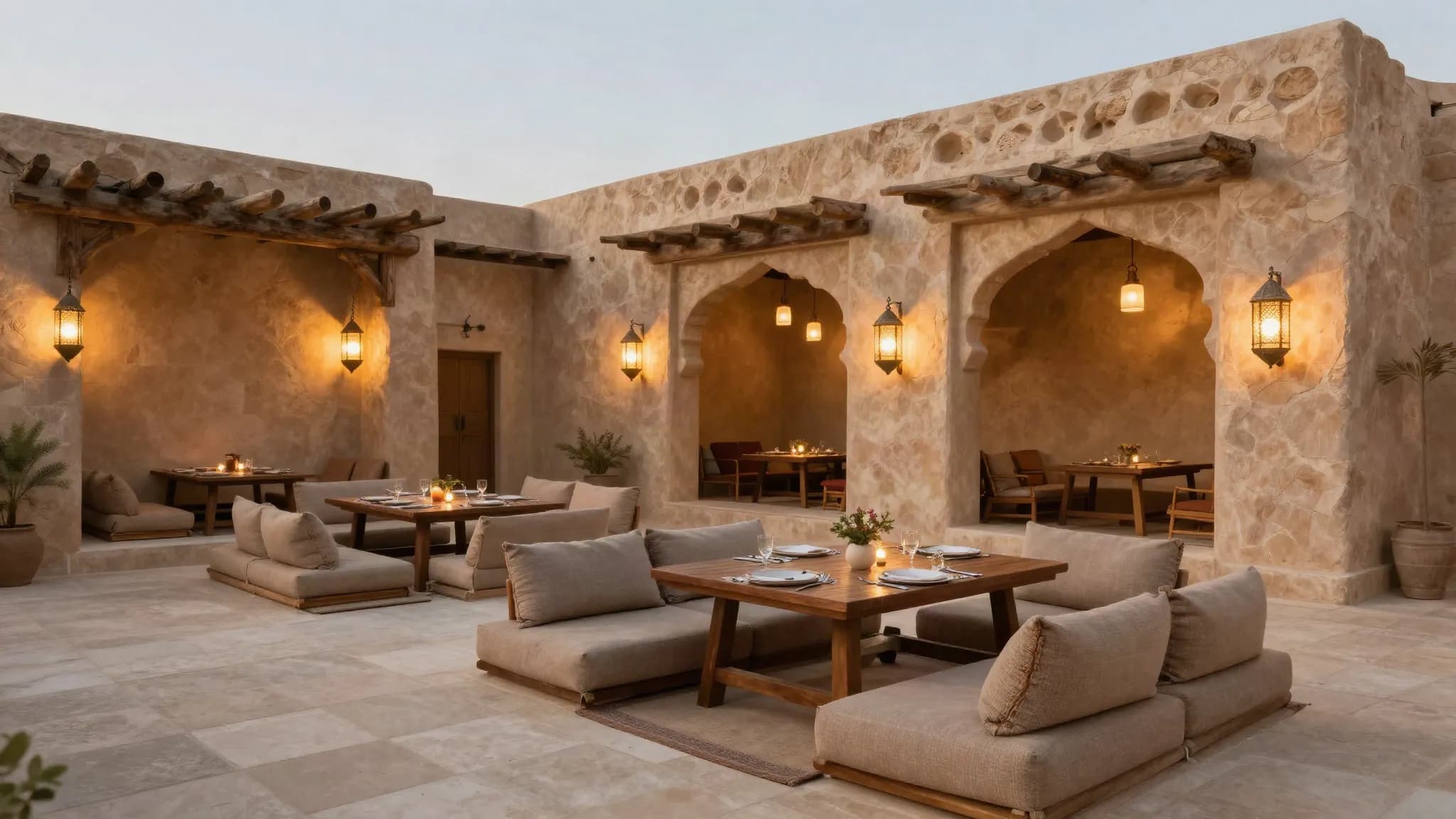
Here is the paradox visitors run into. The Emirates has one of the deepest restaurant scenes anywhere, and the one cuisine that is genuinely hard to find in it is Emirati.
The reason is demographic rather than culinary. Emirati nationals are a minority of the population, and the cooking stayed largely in homes rather than becoming a commercial category. Nobody opened Emirati restaurants for decades because the market was cooking it at home and everyone else wanted something else.
That has changed, slowly. Here is how to find it.
The four kinds of place that serve it
Cultural centres. The most reliable option and the one most visitors miss. Institutions set up to explain Emirati culture run shared meals, usually seated on the floor, usually with someone answering questions frankly. The Sheikh Mohammed Centre for Cultural Understanding in Al Fahidi is the best known and built precisely for this gap. The food is home-style rather than refined, which is the point.
Heritage district restaurants. Al Fahidi and Al Shindagha in Dubai, and the Qasr Al Hosn and Al Ain areas in Abu Dhabi, have small places serving machboos, thareed and harees in restored courtyard houses. Atmosphere is doing some of the work, but the cooking is usually sound.
Modern Emirati dining rooms. A newer category taking the ingredients seriously and plating them contemporarily: camel, dried lime, date syrup, local fish, camel milk ice cream. Good ones are genuinely excellent. Weak ones use the label for a menu that is Levantine with a dried lime dropped in, so read the menu rather than the description.
Neighbourhood cafeterias. The least glamorous and often the most rewarding. Small places in older districts doing chebab and balaleet in the morning and salona at lunch, for very little money.
What to order, in order
Machboos first. Spiced rice cooked in broth with meat, chicken or fish, dried lime and bezar. If a kitchen makes this well it can make everything else.
Thareed second. Stew poured over thin rigag bread that dissolves into it, and the best test of whether the kitchen has patience: the technique is in our recipe.
Harees if it is on. Wheat and meat beaten to a single smooth mass, most commonly served in Ramadan and at celebrations. It takes hours and cannot be rushed, so its presence tells you something about the kitchen.
Balaleet for breakfast. Sweet saffron and cardamom vermicelli under a plain omelette. The combination sounds wrong and is not.
Luqaimat to finish, always. Crisp yeasted dumplings drenched in date syrup.
And gahwa throughout: light, cardamom-heavy, unsweetened, poured a third full. Shake the cup gently side to side when you have had enough or it keeps coming.
Timing beats searching
The single best piece of advice is to align with the calendar rather than hunt.
Ramadan is when the cuisine surfaces everywhere. Iftar tables carry harees, thareed, machboos and luqaimat as standard, including in hotels that ignore the food for the other eleven months. Non-Muslim visitors are welcome at iftar and it is the easiest route to the full repertoire in one sitting.
Winter, roughly November to March, is when heritage villages, outdoor markets and cultural festivals run, and many of them cook on site.
Conversely, an August afternoon is the worst possible time to go looking. The heat is not a minor inconvenience in this region and the outdoor heritage areas are unusable in the middle of the day. Go after dark.
Two practical notes
Portions are communal by default. A machboos ordered for one is frequently enough for two, and the expectation is that a table shares from a central platter rather than ordering individually.
Ask about camel before assuming. Camel meat and camel milk appear on many menus, and camel milk ice cream is genuinely good and worth trying rather than avoiding out of caution.
If none of it works out, the fallback is to cook it, and the dishes above are more forgiving than they look. Start with madrouba, which needs one pot and no technique beyond patience.
Published in The Outspoken Digest
Editorial desk
Outspoken Digest Travel DeskDestinations, airlines, borders and the practicalities of getting there.
Newsletter
The Digest, in your inbox
One edition, sent when it is ready. No noise, and your address is never passed on.
Read Next
More Travel →

Hurricane Simon Closes Puerto Vallarta's Airport and Sends Tourists to Shelters as a Category 4 Storm Nears Mexico
Oct 10, 2026/2 min read


Hurricane Isaias Closes Gulf Coast Airports and Clears Alabama's Beaches as Airlines Waive Change Fees
Oct 8, 2026/3 min read