The Most Overlooked Thing in Your Home Is How It Sounds
Hard floors, glass walls and open plans photograph beautifully and sound terrible. Acoustic comfort is the last unfashionable part of interior design, and the cheapest to fix.
Saturday, August 8, 2026/4 min read
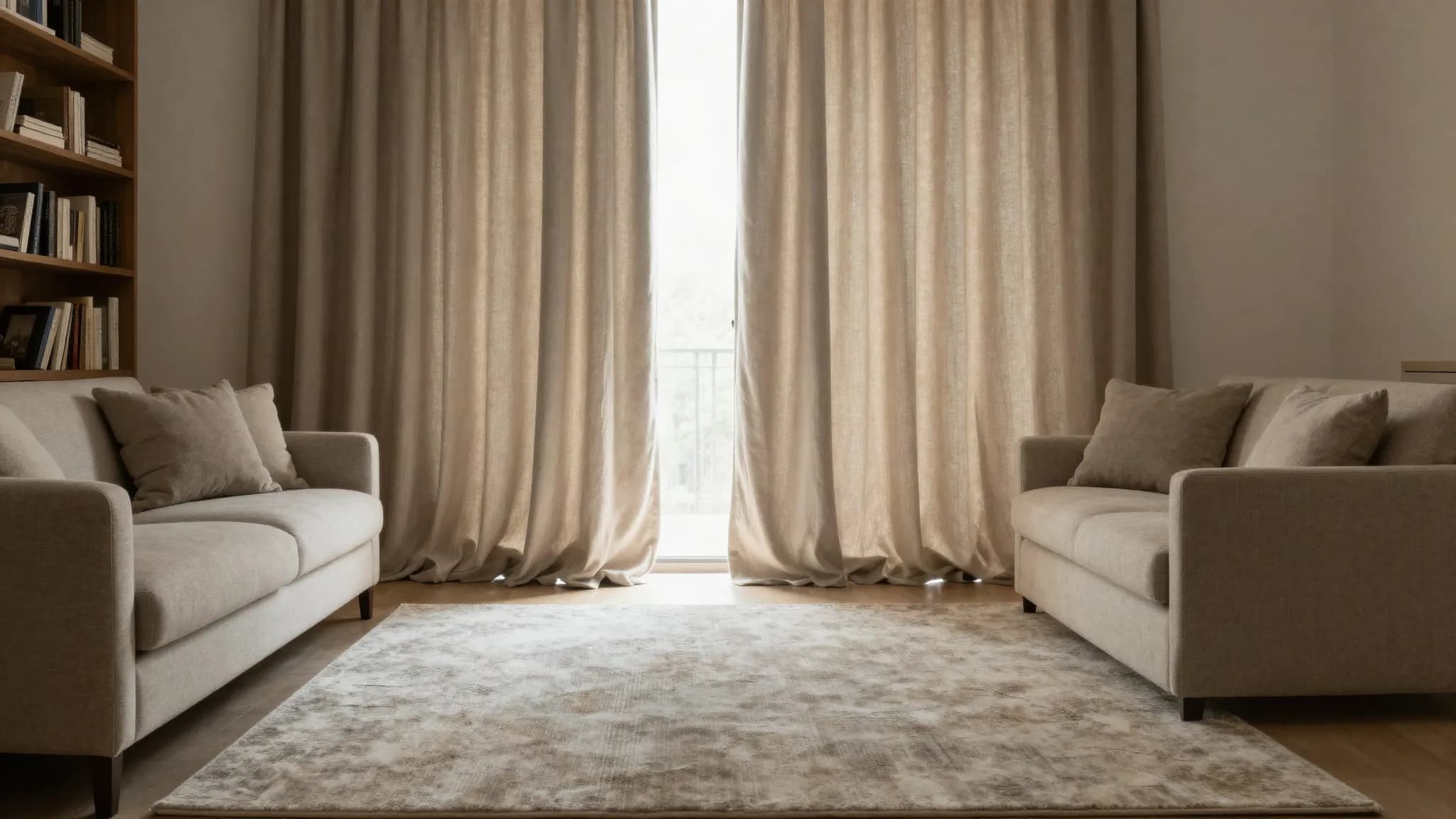
There is a particular kind of apartment that looks superb and is exhausting to live in. Polished floors, a glass wall, an open plan running from the kitchen to the sofa, and every hard surface bouncing sound back at you.
Occupants rarely identify the problem as sound. They say the flat feels stressful, or that they cannot relax in the evening, or that conversation is tiring. The furniture gets rearranged and it does not help, because the issue is not the layout.
Two different problems, often confused
Acoustic complaints split into two categories with different solutions, and treating one with the other's remedy is why so many attempts fail.
Sound insulation is about noise crossing a boundary: the neighbour's television, traffic, the corridor. It is solved by mass and sealing. Heavy materials, sealed gaps, dense doors. Anything light will not help, and this is the expensive category.
Sound absorption is about what happens to noise inside the room: echo, reverberation, the way a voice rings. It is solved by soft porous material with air in it. This is the cheap category, and it is the one causing most domestic misery.
Buying acoustic foam panels to block a neighbour is the classic error. Foam absorbs reflections inside your room and does almost nothing to stop sound arriving through a wall.
Why contemporary interiors sound bad
The dominant look of the past two decades removed almost every absorbent surface a home used to have.
Carpet became polished concrete, timber or large-format tile. Heavy curtains became slim blinds or bare glass. Upholstered furniture became low-profile pieces on legs with tight cushions. Bookshelves full of paper became a screen. Plaster walls stayed bare because art is a commitment.
Then the walls between rooms came down. Open plan is acoustically the worst arrangement available, because the kitchen is the loudest room in a house and the living area is where you want quiet, and now they are one volume with nothing between them.
In this region there is an additional factor. Concrete and blockwork construction, tiled floors chosen for heat and cleaning, and large glazed areas for the view all make sense for the climate and all reflect sound.
What actually absorbs sound
The rule is straightforward: soft, porous, and thick, with air behind it if possible.
A rug is the single highest-impact intervention in most rooms, because the floor is usually the largest uninterrupted hard surface. It needs to be large and it needs an underlay. A small rug marooned in a big room is decoration.
Curtains work if they are heavy and wide. The trick most people miss is fullness: a curtain gathered to twice the width of the window absorbs far more than a flat panel, because the folds trap air. Hanging the track higher and wider than the opening helps as well.
Upholstered furniture with fabric rather than leather, cushions, throws, a fabric headboard, and a full bookshelf all contribute. Books are genuinely effective, being irregular and porous.
Plants help less than the internet claims. A few leaves scatter high frequencies slightly. A jungle would help; a pot by the window will not.
Where to put it
Absorption works best on the surfaces that reflect sound between the people talking.
Think about parallel hard surfaces facing each other, which produce the worst flutter. If two opposite walls are both bare and hard, treating either one breaks the reflection. The ceiling is the most neglected surface and often the most useful, though it is the hardest to change in a rental.
For a room used for calls or recording, the priority is the wall behind and beside where you sit, plus something soft underfoot.
Renting, and other constraints
Almost all of this is available without touching the structure. Rugs, curtains, cushions, a fabric screen, a full bookcase, upholstered seating and a padded headboard require no permission and move with you.
Fabric wall hangings are the most underrated option: a heavy textile mounted a few centimetres off the wall performs remarkably well and reads as art rather than as acoustic treatment.
For open plan spaces, a tall bookcase used as a partial divider between the kitchen and living zone does two useful things at once. It blocks the direct path of noise and absorbs some of the rest. The same piece earns its place twice in a compact flat, as our small space design playbook sets out, and the World Health Organization's environmental noise guidelines explain why chronic noise exposure is treated as a health issue rather than a nuisance.
How to tell if it is working
There is a test that needs no equipment. Stand in the middle of the empty room and clap once, hard.
If you hear a short ringing tail after the clap, the room has a reverberation problem. Add soft material and clap again. When the clap sounds flat and dead, with no tail, the room will feel calmer to be in, and conversation will stop being tiring.
It is the least photogenic improvement you can make to a home, and one of the few that changes how the space feels every single day.
Published in The Outspoken Digest
Newsletter
The Digest, in your inbox
One edition, sent when it is ready. No noise, and your address is never passed on.
Read Next
More Design →
Drew Henry Reset Courreges for Spring 2027 With a Pared-Back Debut at the Palais de Tokyo
Oct 1, 2026/3 min read

Choosing Light Bulbs: Lumens, Kelvin and Colour Rendering Explained, Room by Room
Sep 21, 2026/3 min read


The Bench With the Extra Armrest Is Not Being Thoughtful About Your Posture
Sep 2, 2026/4 min read