Cold Showers and Ice Baths: A Dutch Trial Found Fewer Sick Days, a New Review Found Inflammation. Both Are Right
Three thousand Dutch adults who ended their showers cold took fewer sick days. A 2025 review of eleven trials found stress fell twelve hours after a plunge and inflammation rose. What is known, what is marketing, and why the first minute can kill.
Sunday, September 6, 2026/4 min read
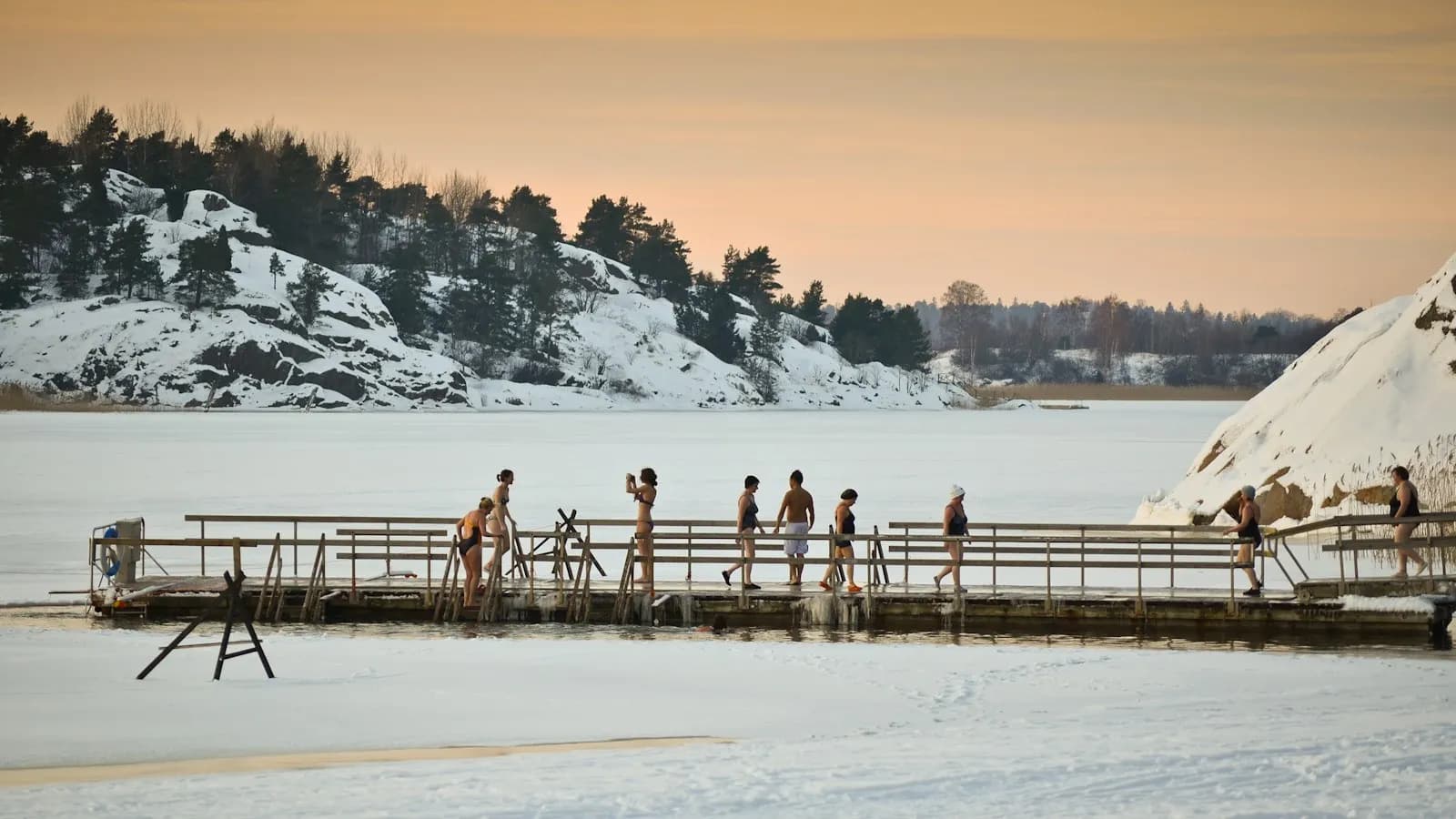
Cold water has become the most visible wellness ritual of the decade. Ice baths on balconies, plunge tubs in gyms, cold showers prescribed by every podcast host who owns a wetsuit. The claims range from the modest, that it wakes you up, to the sweeping: immunity, fat loss, depression, longevity. The evidence is smaller than the claims and more interesting than the sceptics allow.
The Dutch shower trial
The largest experiment is a randomised trial from the Netherlands published in PLOS One in 2016. Geert Buijze and colleagues recruited 3,018 adults with no habit of cold showering and randomised them to finish their daily shower with 30, 60 or 90 seconds of cold water for thirty consecutive days, or to carry on as usual. The primary outcome was days off work sick.
The cold shower groups reported a 29 per cent reduction in sickness absence compared with the control group. The length of the cold exposure made no difference; thirty seconds did as well as ninety. There was, however, no difference in the number of days participants felt ill. They were ill just as often; they took fewer days off. The authors suggested the cold shower might reduce the severity of symptoms, or might simply change how people respond to feeling unwell. Both readings fit the data. Four in five participants in the cold groups completed the full thirty days, which is a high figure for any health intervention and worth noting in itself.
The 2025 review
In January 2025 a team at the University of South Australia published a systematic review and meta-analysis in PLOS One of randomised trials of cold water immersion in healthy adults: eleven studies, 3,177 participants, water at 7 to 15 degrees, exposures from thirty seconds to two hours, mostly in baths.
The findings were mixed in a way that the enthusiasts and the debunkers have each quoted selectively. Inflammation markers rose significantly immediately after immersion and an hour later, which is the opposite of the anti-inflammatory claim and is what one would expect from a physical stress. Stress scores fell significantly at twelve hours after immersion, but not immediately, not at one hour and not at twenty-four. The pooled analysis found no significant effect on immune function. The narrative synthesis, where the trials were too different to pool, pointed to improvements in sleep quality and quality of life and none in mood, and leaned on the Dutch sick-day result for its longer-term claim. The authors were careful: the effects appear to be time dependent, the trials are few and small, and most involve people who are already fit.
That is the honest state of the science. A brief cold exposure is an acute stress from which the body recovers, with a possible stress and sleep benefit in the following hours, a possible small effect on how people experience minor illness, and no demonstrated effect on immune function, fat loss or lifespan in humans.
The part that is not in dispute
Cold water can kill a healthy adult in the first minute, and it does so every year, usually in open water and usually to someone who was not planning to swim. The mechanism is the cold shock response: sudden immersion in water below about fifteen degrees triggers an involuntary gasp and a period of uncontrollable rapid breathing, during which the ability to hold the breath falls from a minute or more to a few seconds. If the head is under water at the gasp, water is inhaled. Heart rate and blood pressure spike at the same moment, and in people with underlying heart disease that spike can trigger a fatal arrhythmia. The response peaks in the first thirty seconds and fades over two or three minutes, which is why the lifeboat services' advice to anyone who falls into cold water is to float on the back and do nothing until the gasping passes.
None of this makes an ice bath dangerous for a healthy adult who gets in slowly, keeps the head out, breathes out deliberately, and can get out at will. It does mean that the practice is not risk free, and that the people for whom it is riskiest are exactly the middle-aged men with untreated blood pressure who are most drawn to it.
A sensible version
- A cold finish to the shower, thirty seconds, is the intervention with the best trial behind it. Longer adds nothing the trial could detect.
- For a bath or plunge, ten to fifteen degrees for one to three minutes is where the trials operated. Colder and longer is not more effective; it is more dangerous.
- Get in gradually. Never jump or dive into cold water, anywhere, ever.
- Never alone in open water, and never after alcohol.
- Anyone with heart disease, uncontrolled hypertension, Raynaud's or a history of arrhythmia should talk to a doctor first, and should probably not.
The claim that cold exposure treats depression rests on a handful of tiny studies and one much-cited hypothesis paper, and is not established. The claim that it burns meaningful fat through brown adipose tissue is true in a laboratory sense and irrelevant in a dietary one. The claim that it feels good afterwards is the best supported of all, and may be reason enough. The pattern, a real physiological effect wrapped in claims it cannot carry, is the same one our desk found in the evidence review of slow breathing and in the piece on the word detox.
Published in The Outspoken Digest
Editorial desk
Outspoken Digest Health DeskMedicine, public health and the research behind the headlines, read carefully.
Newsletter
The Digest, in your inbox
One edition, sent when it is ready. No noise, and your address is never passed on.
Read Next
More Health →
BMJ Analysis Warns Fast-Growing Private Testosterone Prescribing Could Land on the NHS
Oct 14, 2026/2 min read
Cochrane Review Finds Medical Cannabis Has No Clear Benefit for Insomnia, With Weak Evidence Either Way
Oct 13, 2026/2 min read

Lancet Commission Names 17 Threats to Global Health Through 2100, With Obesity the Largest by Burden
Oct 12, 2026/2 min read