Cost Per Wear Is the Only Clothing Maths Worth Doing, and It Can Also Justify Anything
Divide the price by the number of times you will actually wear it. The sum is trivial, the discipline is not, and the reason it keeps producing flattering answers is that almost everybody overestimates the second number.
Saturday, August 22, 2026/4 min read
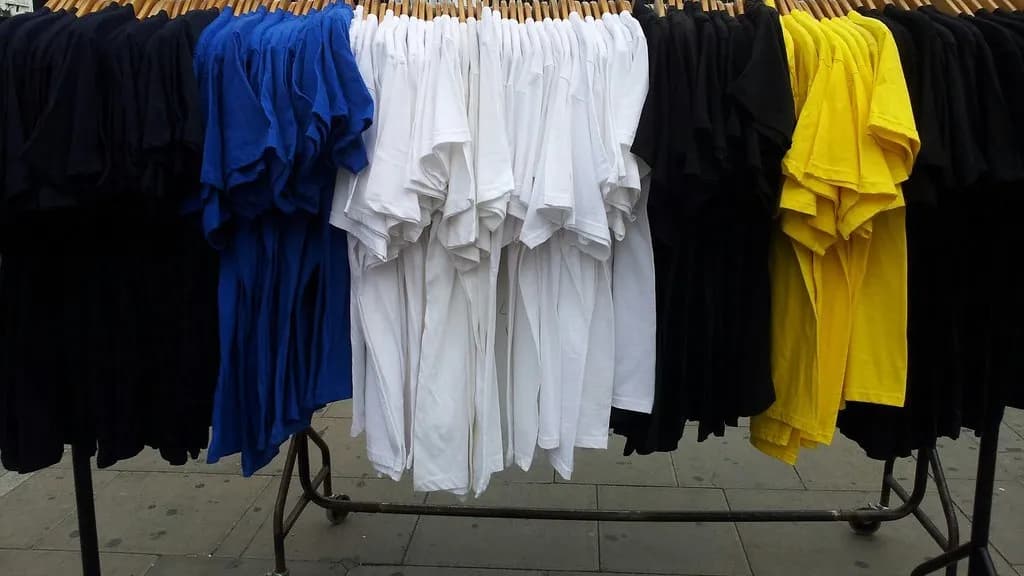
Cost per wear is the price of a garment divided by the number of times you wear it. A coat at 1,200 dirhams worn two hundred times costs six dirhams a wearing. A jacket at 300 dirhams worn four times costs seventy five.
This is the only piece of arithmetic in fashion that reliably changes behaviour, and it is also the most frequently abused, because the divisor is a guess and the guess is nearly always generous.
Why does the calculation usually flatter the expensive option?
Because it is performed before the purchase, by the person who wants to make it.
The price is known exactly. The number of wears is imagined, and imagined in the mood of wanting the thing. That asymmetry is the whole problem. Any purchase can be justified by assuming enough future wearings, and the assumption is never checked afterwards, because nobody counts.
The honest version requires a harder question than how much will I wear this. It is: how many times did I wear the last three things I bought for this purpose? That number is knowable, it is usually much lower than expected, and it is the correct divisor.
When is cost per wear genuinely useful?
In three specific situations, and it is close to useless outside them.
Where the use is already established. You know what you wear to work, because you have been doing it for years. Applied to a category you already have a track record in, the divisor is evidence rather than hope.
Where durability is the variable. Two coats of similar style at different prices, where the difference is fabric weight and construction, is exactly the comparison the sum was designed for. Judging that difference is a physical skill, and it is covered in how to judge a garment before you buy it.
Where the item is boring. Cost per wear works best on the least interesting things in a wardrobe: a white shirt, a plain trouser, everyday shoes. High wear counts are plausible precisely because the item is not memorable.
It fails on anything occasion driven. A wedding outfit does not become sensible because you tell yourself you will wear it again.
What does resale do to the sum?
It adds a term most people leave out, and it is a significant one.
Secondhand has stopped being a fringe channel. In the United States, resale grew about 13 per cent in 2025, close to four times the rate of the broader clothing market, reaching 55.5 billion dollars, which is roughly 12 per cent of the 458 billion Americans spent on clothing, footwear and accessories. Fifty nine per cent of consumers bought secondhand that year, up seven points in three years, and 46 per cent now look at resale before buying new, rising to 58 per cent among younger shoppers. The global market is on a path towards 393 billion dollars by 2030.
Two consequences follow for the individual buyer.
On the buying side, the comparison is no longer new against new. It is new against the same item, a season old, at a substantial discount, which changes the cost per wear of the new one considerably for the worse.
On the selling side, the true cost of a garment is what you paid minus what you can recover. That resale value is not evenly distributed: it concentrates in recognisable brands, classic pieces and good condition, which means the same qualities that make something durable also make it recoverable. The formula becomes price minus resale value, divided by wears.
Does this argument survive contact with the market?
It has to be applied against what is actually happening to prices, which is not favourable.
Luxury pricing rose steeply through the last few years while the industry lost a large part of its customer base, a trade set out in the sixty million customers luxury has lost. When prices rise faster than quality, cost per wear stops rewarding the expensive option, because the numerator moved and the durability did not.
That is the situation in several categories right now. The tier immediately below luxury often uses comparable materials, and the gap in construction is frequently smaller than the gap in price. Running the sum honestly on those two options is the single most useful thing a shopper can do this year, and it is the reason secondhand keeps winning it, as we set out in how preowned became a style signal rather than a compromise.
The one habit that makes it work
Count for a month.
Not a spreadsheet, not an app, just a note of what you actually put on. Most people discover that a small number of items carry the majority of their wearings, and that the pieces they think about most are not in that group.
Once you know which slots in your wardrobe genuinely take two hundred wearings a year, the arithmetic stops being a justification and becomes a filter. That is the difference between using cost per wear to decide and using it to agree with a decision you have already made.
Published in The Outspoken Digest
Newsletter
The Digest, in your inbox
One edition, sent when it is ready. No noise, and your address is never passed on.
Read Next
More Fashion →
Victoria's Secret Fashion Show Heads to Los Angeles on Sunday With an All-Women Lineup and Three Angel Hopefuls
Oct 15, 2026/2 min read

Anthony Vaccarello Is Leaving Saint Laurent After a Decade, and Kering Has Not Yet Named His Successor
Oct 9, 2026/2 min read

Louis Vuitton Closes Paris Fashion Week With Hovering Cars, Paper-Light Dresses and a Louvre Courtyard Cityscape
Oct 7, 2026/2 min read

Celine Dion Made a Surprise Return to the Catwalk to Close L'Oreal's Paris Fashion Week Opening Show
Sep 29, 2026/2 min read