The Leading Cause of Blindness in Working-Age Adults Has No Symptoms Until It Is Nearly Too Late
Diabetic retinopathy does not hurt, does not blur vision early, and gives no warning a person can feel. By the time sight changes, the damage that caused it has usually been accumulating for years.
Sunday, July 19, 2026/4 min read
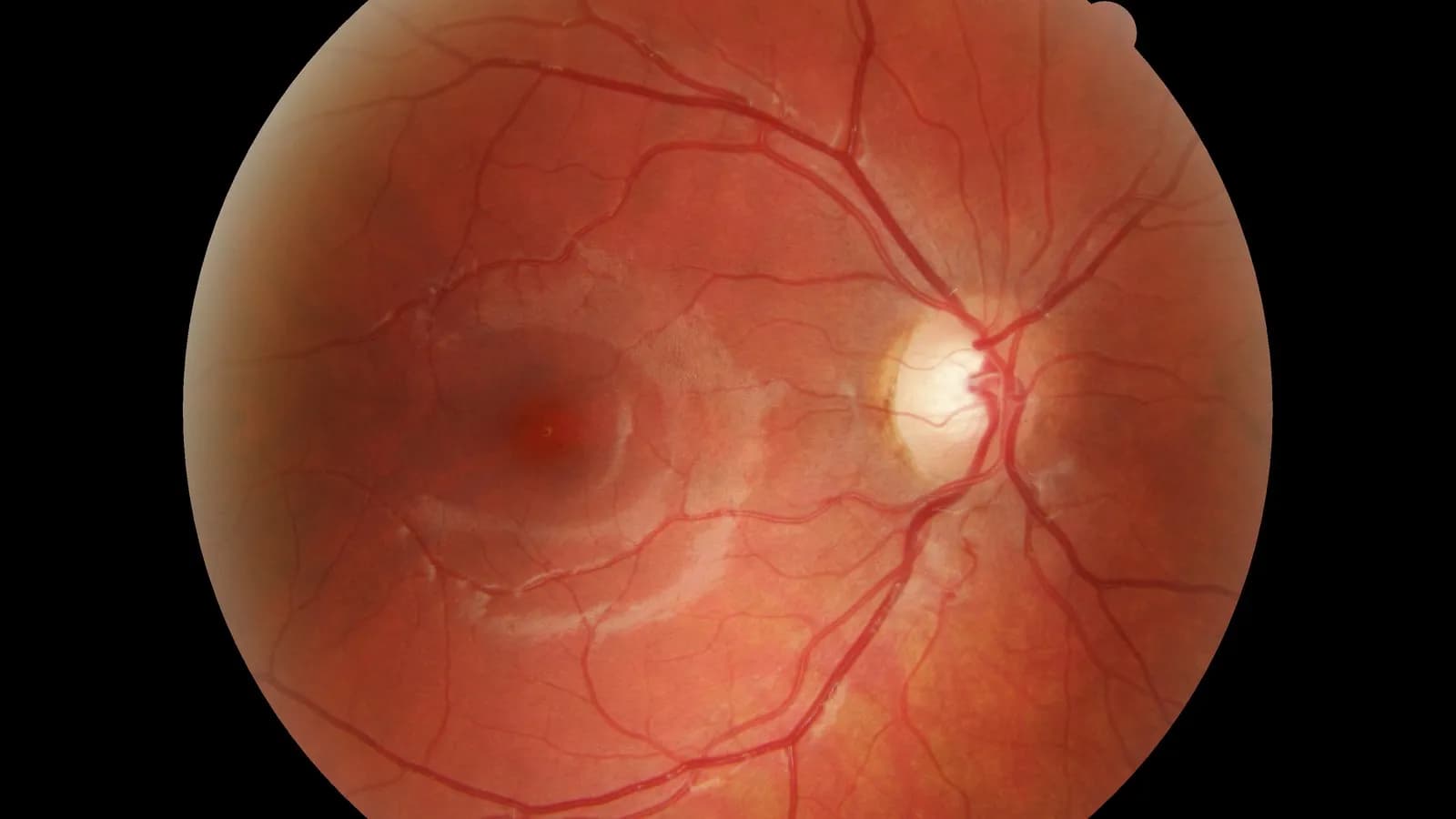
Diabetic retinopathy is the leading cause of blindness among working-age adults. It is also, in its early and most treatable stages, completely silent.
That combination is the whole problem. Almost every other serious condition gives you something: pain, a lump, breathlessness, a symptom that sends you to a doctor. The retina gives you nothing. It deteriorates quietly, and the first thing many people notice is a change in vision that has arrived far too late in the process to be reversed.
What is actually happening in the eye?
Small blood vessels are being damaged by years of high glucose, and the retina is unusually dependent on very small blood vessels.
The early stage, called non-proliferative retinopathy, involves vessels that weaken, bulge and leak. An ophthalmologist can see microaneurysms and small haemorrhages on examination well before you can see anything wrong. Vision at this point is typically normal.
If it progresses, the retina becomes starved of blood supply and responds by growing new vessels. That sounds like a repair and is closer to a catastrophe. The new vessels are fragile and grow in the wrong places, and they bleed into the eye or contract and pull the retina away from the back of the eye. This is proliferative retinopathy, and it is how people lose sight suddenly after years of no symptoms at all.
Separately, and at any stage, fluid can leak into the macula, the small central part of the retina responsible for detailed vision. Diabetic macular oedema is the most common way diabetes damages reading vision, and it can occur while the rest of the retina looks relatively unbothered.
How often should someone with diabetes have their eyes screened?
The intervals are well established and widely ignored.
- Type 2 diabetes: screening should begin at diagnosis. This is not caution, it is arithmetic. Type 2 is frequently present for years before it is found, so retinopathy may already exist on the day someone is told they have diabetes.
- Type 1 diabetes: screening usually begins within three to five years of diagnosis, since the onset is normally identifiable and the clock starts from a known point.
- Thereafter: at least annually. Where there is no retinopathy or only minimal changes, some guidelines permit an interval of one to two years, and where disease is more advanced, far more frequently.
Note that this is a screening examination, not the sight test you have for glasses. A refraction check tells you nothing about the retina. The examination requires a dilated view or retinal photography, and asking an optician for one is a different request from asking for a new prescription.
Can it be treated?
Yes, and considerably better than a generation ago, which makes the detection failure more frustrating rather than less.
Anti-VEGF injections into the eye can reduce macular oedema and, in many cases, recover vision that has already been lost. Laser photocoagulation remains effective at stabilising proliferative disease. Surgery can address bleeding and retinal detachment.
But every one of these works better the earlier it starts, and none of them restores a retina that has been destroyed. Treatment converts a progressive condition into a managed one. It does not undo a decade.
The most powerful intervention remains upstream: glucose control, blood pressure control, and not smoking. Blood pressure in particular is underrated here and is one of the strongest modifiable factors in whether retinopathy progresses.
Why do people miss the appointment?
Because nothing hurts, and human beings do not attend appointments for problems they cannot perceive.
This is not a character flaw, it is a predictable design failure in how the care is offered. Screening that requires a separate journey, a separate booking, and half a day off work will be skipped by people who feel completely well. Screening that happens opportunistically, in a place they were already going, will not.
Retinal photography with remote reading has made that far easier than it used to be, and automated analysis of retinal images has matured to the point where it is used in real screening programmes. The technology is not the constraint. Getting people through the door once a year is.
What should you do?
Book it, specifically, and use the right words.
Ask for diabetic retinal screening rather than an eye test. Go annually even when your vision is perfect, because perfect vision is exactly what early retinopathy looks like. If you have had diabetes for years and have never had a dilated retinal examination, that is the appointment to make this month.
And treat it as part of a set. The eyes, the kidneys and the nerves are damaged by the same process in the same small vessels, which is why finding a problem in one is a reason to look carefully at the others. In a region where one in five adults is affected, an annual retinal photograph is among the highest-value fifteen minutes in medicine.
Published in The Outspoken Digest
Editorial desk
Outspoken Digest Health DeskMedicine, public health and the research behind the headlines, read carefully.
Newsletter
The Digest, in your inbox
One edition, sent when it is ready. No noise, and your address is never passed on.
Read Next
More Health →
Kenya's Ebola Count Rises to Seven After Three Health Workers Who Treated the First Patient Test Positive
Oct 17, 2026/2 min read

BMJ Analysis Warns Fast-Growing Private Testosterone Prescribing Could Land on the NHS
Oct 14, 2026/2 min read

Cochrane Review Finds Medical Cannabis Has No Clear Benefit for Insomnia, With Weak Evidence Either Way
Oct 13, 2026/2 min read

Lancet Commission Names 17 Threats to Global Health Through 2100, With Obesity the Largest by Burden
Oct 12, 2026/2 min read