Lumens Are the Number on the Box and the Least Useful Thing About a Dive Light
Manufacturers compete on brightness because it is a single large number. Underwater, beam angle, burn time at full output and the switch you can operate in gloves decide whether a torch is any good.
Saturday, September 5, 2026/3 min read
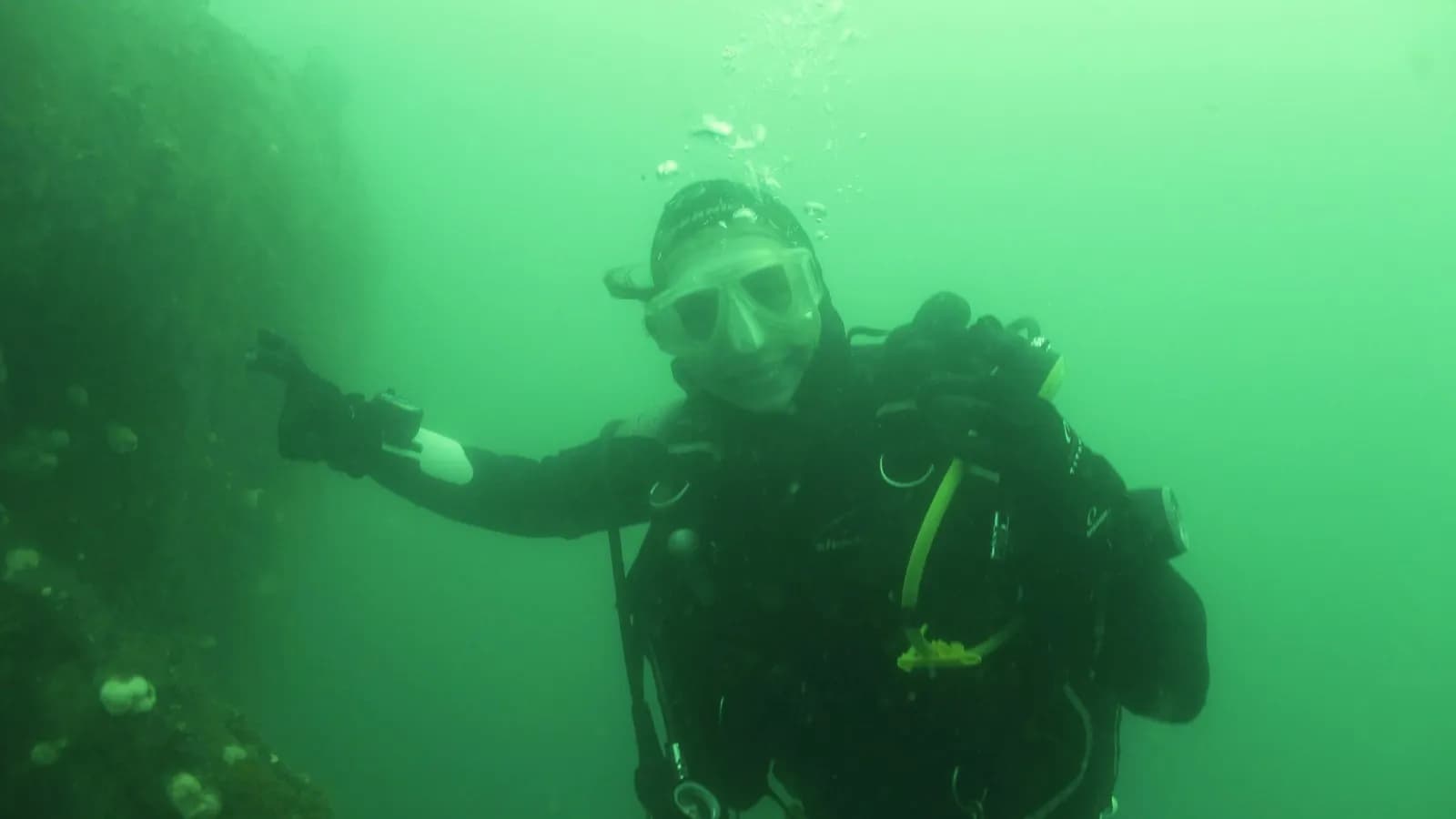
Every dive torch is sold on lumens. It is a big number, it is easy to compare, and it is close to the least useful specification for choosing one.
Lumens measure total light output in all directions. What determines whether you can see anything underwater is where that light goes, how long it keeps going, and whether the water lets it through at all.
Beam angle is the specification that matters
The same 1,000 lumens concentrated into a narrow eight degree beam and spread across a wide hundred and twenty degree flood are two completely different tools.
A narrow beam punches through water, reaches into crevices, and is what you want for looking at things and for signalling. It is also directional enough that you can point precisely, which matters when you are indicating something to a buddy.
A wide beam lights a scene evenly, which is what video and photography need, and what makes a night dive feel comfortable rather than like looking down a tube.
Most divers want a narrow to medium primary and, if they shoot video, separate wide lights. A single torch trying to do both does neither well.
Why brightness helps less than you expect
Water absorbs light, and it does so selectively.
Red disappears first, within a few metres, then orange and yellow. By twenty or thirty metres the world is blue and grey. This is why a torch transforms a daytime dive at depth: it is not adding brightness so much as returning colour that the water has removed.
Water also scatters light off suspended particles, which is why a very powerful torch in poor visibility can be worse than a modest one. You illuminate the particles between you and the subject, and the result is the underwater equivalent of full beam headlights in fog. In silty or planktonic water, less light and a narrower beam usually sees further.
Burn time, and the number that is often quietly wrong
Read burn time carefully, because manufacturers state it in different ways.
Some quote runtime at full output until the battery is exhausted. Others quote until output drops to a defined fraction, which is more honest. Others quote a figure that includes the long dim tail after the torch has stepped down to a fraction of its rated brightness.
Many torches use thermal or battery step-down, dropping output automatically after some minutes at maximum. That is sensible engineering, since a high output LED in air will overheat, and it means the advertised lumen figure may only apply for the first part of the dive.
The practical rule: choose a torch whose runtime at the output you actually intend to use comfortably exceeds your longest planned dive, and then carry a backup anyway.
Two torches, always, on a night dive
A primary and a backup, and the backup should be independently capable of getting you out.
A dive that becomes dark unexpectedly is unpleasant. A night dive where the only light fails is a genuine emergency, particularly on a wreck or under a boat. The backup should be small enough that you carry it every time rather than only when you remember.
Our guide to a first night dive covers the wider planning.
Batteries and the airport
Most modern torches run rechargeable lithium ion cells, commonly 18650 or 21700 format, and this has consequences beyond the water.
Airlines require lithium batteries in carry-on baggage rather than in the hold, and loose cells must have their terminals protected. Larger canister lights can exceed watt-hour limits and may need airline approval or be refused entirely. Check the rating printed on the battery before you travel, not at the desk.
The maintenance that actually matters is the O-ring. Rinse in fresh water, open the torch only with dry hands, keep the seal clean and lightly greased with silicone, and never over-tighten, which deforms the ring. A flooded torch with a lithium cell in it is not merely a broken torch.
Signalling, which is the other job
Light is the primary communication tool in the dark and the conventions are simple.
A slow circle on the bottom or a wall means everything is fine. Rapid side to side movement means attention, or a problem. Never shine a torch into another diver's face, which destroys their night vision for several minutes and is the commonest breach of etiquette on a night dive.
On the surface, a torch is one of the most effective signalling devices available at dusk or in darkness, which is why it belongs alongside the buoy in the argument we make in today's piece on SMBs.
Published in The Outspoken Digest
Editorial desk
Outspoken Digest Diving DeskCovers freediving, recreational and technical diving, dive medicine and the incidents the sport learns from.
Newsletter
The Digest, in your inbox
One edition, sent when it is ready. No noise, and your address is never passed on.
Read Next
More Diving →
Bleached Corals Recovered After Touching a Healthy Clone, Stanford Lab Study Finds
Oct 15, 2026/2 min read
Black Swallower Filmed With a Hugely Swollen Belly 1,259 Metres Down Off Trinidad and Tobago
Oct 13, 2026/2 min read

Playing Recordings of a Healthy Reef Drew More Coral and Fish Larvae to Artificial Structures Off Hawaii
Oct 9, 2026/3 min read

Blacktip Sharks Can Hear a Sound From Nearly 250 Feet Away and Swim Straight Toward or Away From It
Oct 1, 2026/2 min read