A Tanker Took Three Projectiles in the Strait, and This Time the Traffic Data Moved
Brent topped 92 dollars on Tuesday, up from just over 88 at Monday's close. A tanker was hit crossing the Strait of Hormuz on Monday by three unknown projectiles, and transits through the channel fell to 107 in the week to 30 August from 121.
Outspoken Digest Business Desk
Tuesday, September 1, 2026/3 min read
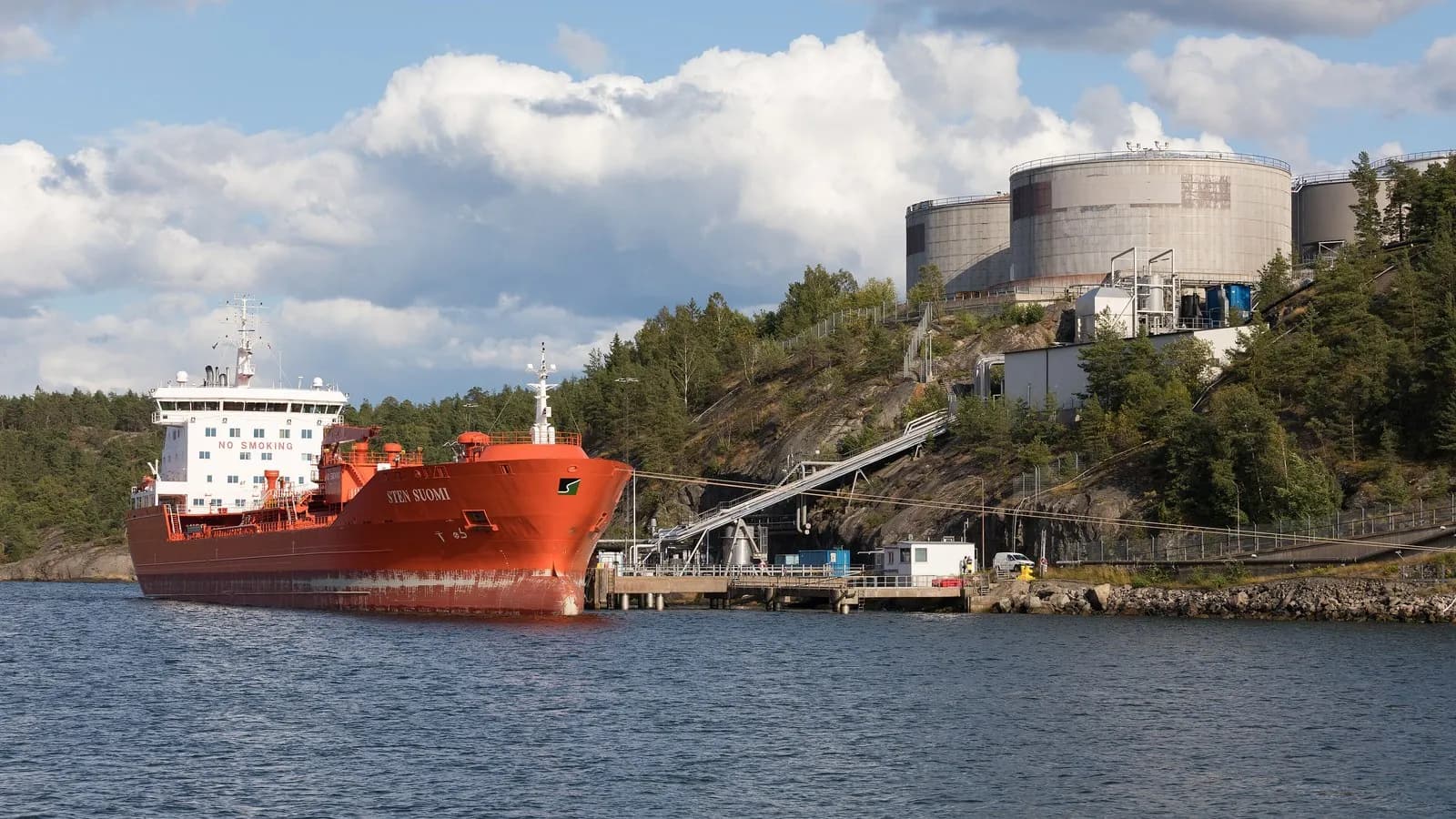
Brent crude rose about 2 per cent on Tuesday to top 92 dollars a barrel, with the November contract at 92.31 by quarter to nine London time, against a Monday close of just over 88.
This morning we wrote that the oil price would tell you what traders expect and the traffic data would tell you what shipowners are actually doing, and that when the two disagree the second one is usually right. The traffic data has arrived.
The number that matters
107 transits through the Strait of Hormuz in the week to 30 August, down from 121 the week before.
That is a fall of about 12 per cent in a single week, in a channel that normally carries around a fifth of the world's seaborne oil. It is the first hard evidence in this phase of the conflict that the risk is being priced in decisions rather than only in futures contracts. A shipowner who declines a voyage has done something a trader has not.
Alongside it, a detail that should worry anyone who relies on this data: many vessels are running dark, with their automatic identification systems switched off. Every count of transits is therefore a floor rather than a measurement, and the real decline could be larger than the published one. It is also, in itself, a sign of how the crews are assessing the danger.
What happened to the tanker
On Monday a tanker crossing the strait was struck by three unknown projectiles. Nobody was hurt. No group claimed responsibility.
Three projectiles is not a warning shot and it is not a mine. It is a deliberate engagement of a merchant ship by somebody who has not said who they are, which is the worst combination available for the shipping market, because an unclaimed attack cannot be deterred, negotiated with, or insured against by identifying the party.
This is the escalation that changes the arithmetic for owners and underwriters. Our piece this morning on the strikes on Larak Island set out why the mine threat was the specific fear. A hull actually being hit does the same work faster.
How this weekend escalated
American forces struck Iranian positions on Larak Island over the weekend, after the Revolutionary Guard was observed preparing to fire rockets carrying sea mines into the channel. Iran fired at two bases used by American forces in Jordan, King Hussein and Al Azraq. President Trump said of Iran that we are going to hit them hard.
So the sequence now runs: preparation to mine, a strike on the launchers, retaliation against bases in a third country, and a merchant ship hit by unattributed fire. Four steps, one weekend, none of them reversed.
The forecast worth taking seriously
Saul Kavonic, an energy analyst, framed it as a market coming to terms with a protracted situation of no war and no peace, with only partial volumes moving through the strait, potentially lasting well into 2027.
That is a more useful frame than either of the two on offer in most coverage. This is not a closure of Hormuz, which would be an economic event of a different order and which nobody has attempted. It is also not a return to normal, which the transit numbers now rule out.
A long middle state is the expensive outcome for importers, because it does not resolve. Insurance stays elevated, routes stay longer, vessels stay scarce on this run, and the premium becomes a permanent line in the cost of every barrel that moves. We set out how that has already reshaped the trade in six months of the Hormuz war economy.
What to watch next
Whether next week's transit count falls again, whether anyone claims the attack on the tanker, and whether war risk premiums for the run are repriced.
The price of crude will keep reacting to headlines and reversing. The count of ships willing to make the crossing will not reverse for a headline, which is exactly why it is the number to follow.
Published in The Outspoken Digest
Editorial desk
Outspoken Digest Business DeskCompanies, markets and the money moving through the region.
Newsletter
The Digest, in your inbox
One edition, sent when it is ready. No noise, and your address is never passed on.
Read Next
More Business →
Starbucks Says It Is Not Buying Chipotle, Ending a Four-Day Takeover Story and Costing Chipotle About 4 Percent
Oct 13, 2026/2 min read
Wall Street Ends Mixed Near Records as Chip Stocks Slide, Oil Climbs and Traders Await Wednesday's Inflation Report
Oct 13, 2026/2 min read

Robert Hall and Michael Woodford Win the Nobel Prize in Economics for Models That Steady Economies
Oct 12, 2026/2 min read

Nasdaq Falls 1.25% as the FT Puts OpenAI's Annualized Revenue Near $50 Billion, Not $70 Billion
Oct 9, 2026/2 min read