The 400 Metre Cube Is Paused, Its Deadline Has Moved to 2040, and Its Chief Executive Has Gone
New Murabba has replaced Michael Dyke with a Public Investment Fund executive who is already running another developer. Work on the Mukaab is suspended, the district around it continues, and the completion date has slipped by a decade.
Saturday, August 29, 2026/3 min read
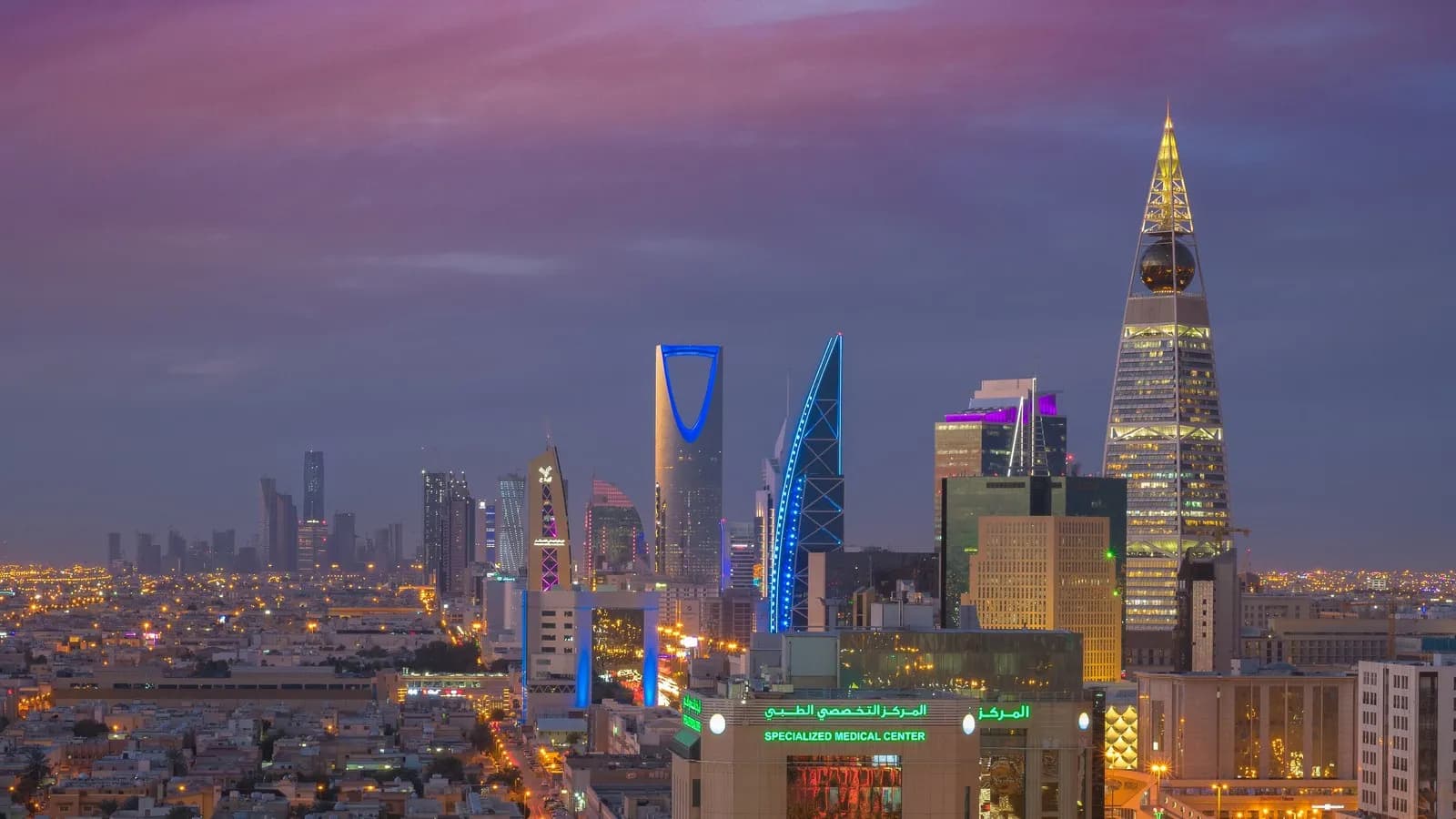
New Murabba, the company building the most rendered piece of architecture of the decade, has changed its chief executive. Sabah Barakat, a senior executive at Saudi Arabia's Public Investment Fund, takes the job in an acting capacity, replacing Michael Dyke, who had run the project since January 2024. Barakat is also acting group chief executive of Roshn, another PIF backed developer.
One person now has the top job at two of the kingdom's property companies. That is not a detail about staffing. It is a statement about how many chief executives these projects currently need.
What the Mukaab was
A cube 400 metres on each side, in north west Riyadh, containing residences, hotels and entertainment space, with an interior large enough to hold twenty Empire State Buildings. It was announced in February 2023 and it did what it was designed to do, which was to be looked at.
No building of the last ten years has been rendered, animated and reposted more. The Mukaab was never only a building. It was the image Saudi Arabia used to say that Vision 2030 was a physical programme rather than a policy document, and it worked in exactly that register.
What has actually happened
Work on the Mukaab itself is suspended. Development of the surrounding district continues.
That distinction matters more than the headline. New Murabba is a whole quarter, roughly 19 square kilometres, of which the cube is the centrepiece and a small fraction of the floor area. Building the district and pausing the object is a decision to keep the useful part and stop the expensive symbol, which is a more rational sequencing than it sounds.
The completion date has moved from 2030 to 2040. Ten years is not a delay. It is a different project, handed to a different set of decision makers, under conditions nobody can currently forecast.
Why now
Oil, and arithmetic.
Lower than anticipated oil prices over recent years have cut state revenues while the giga-project programme was committing capital at a rate set when the outlook was better. The Public Investment Fund's 2026 to 2030 strategy, published in April, omitted or substantially scaled back several projects. This is that strategy arriving at a specific building site.
The pattern is consistent across the portfolio and it has a shape worth naming. The projects that survive are the ones with a revenue line: housing people will buy, districts that can be leased, infrastructure that carries traffic. The projects that pause are the ones whose value was the picture.
What this says about architecture as a national instrument
The Mukaab was commissioned to be extraordinary, and extraordinary is expensive in a way that scales badly.
A 400 metre cube is not a tall building with a novel skin. It is a structural problem with almost no precedent, because the loads, the fire strategy, the vertical transport and the mechanical plant for an enclosed volume of that size do not scale from anything already built. Every one of those problems is solvable. Each solution costs money that a conventional tower of the same floor area does not spend.
That is the trade a signature project makes. It buys global attention with a form that cannot be value engineered, because the form is the point. When revenue tightens, the same quality that made it worth commissioning is what makes it the first thing to stop.
What to watch
Whether the district gets built.
If the housing, the offices and the transport links around the empty centre are delivered on something like the original schedule, this was a sensible re-sequencing and the cube becomes a thing that may or may not arrive in the 2040s. If the district slows too, then the pause was the first move rather than the whole move.
Either way, the more interesting question for anyone reading this as architecture rather than as finance is what Riyadh is left with. We looked at the version of the city that does not depend on any single object in the argument for a human scale Riyadh, and at the programme measured against its own targets in Vision 2030 by the numbers. A quarter that works at street level will matter to more people than a cube that photographs well, and it is the part still being built.
Published in The Outspoken Digest
Newsletter
The Digest, in your inbox
One edition, sent when it is ready. No noise, and your address is never passed on.
Read Next
More Design →
Drew Henry Reset Courreges for Spring 2027 With a Pared-Back Debut at the Palais de Tokyo
Oct 1, 2026/3 min read
Choosing Light Bulbs: Lumens, Kelvin and Colour Rendering Explained, Room by Room
Sep 21, 2026/3 min read
The Bench With the Extra Armrest Is Not Being Thoughtful About Your Posture
Sep 2, 2026/4 min read