The Bench With the Extra Armrest Is Not Being Thoughtful About Your Posture
Sloped ledges, studded window sills, armrests in the middle of a bench, blue lighting in a toilet. Defensive design is usually described as deterring antisocial behaviour, and it works by making a place slightly worse for everybody.
Wednesday, September 2, 2026/4 min read
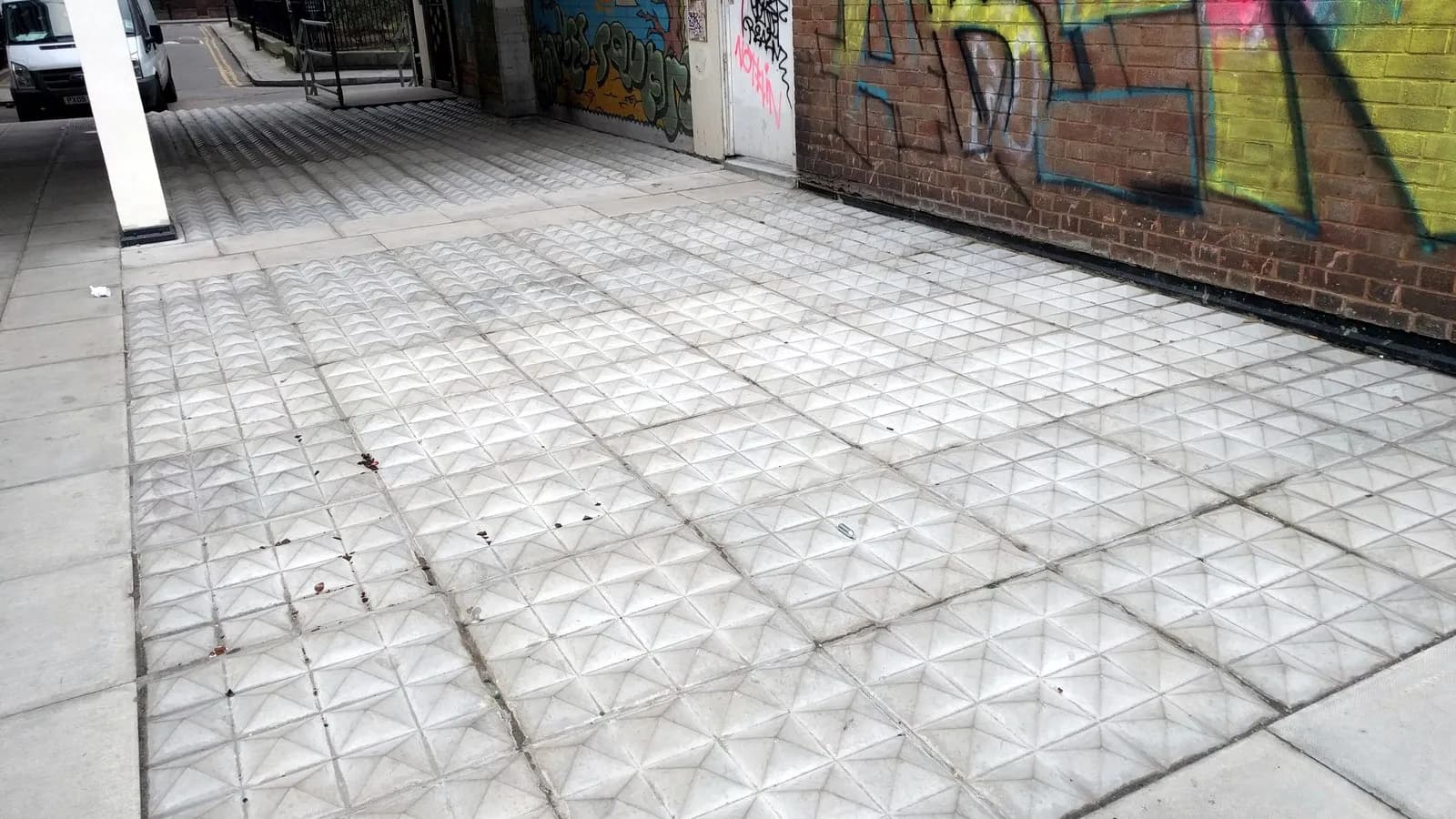
Once you can see it you cannot stop seeing it. A ledge at exactly sitting height with a row of metal studs along the top. A bench divided into three by armrests nobody leans on. A doorway alcove floored with cobbles set on edge. A flat roof edge given a decorative ripple that happens to be impossible to skate.
This is defensive design, or hostile architecture depending on who is describing it, and the arguments about it are more interesting than the slogans on either side.
What it actually is
Design that removes a possible use of a space by making it physically uncomfortable, rather than by prohibiting it.
The distinction matters. A sign saying no sleeping requires somebody to enforce it, creates a confrontation, and can be argued with. A ledge that slopes at fifteen degrees requires nobody, creates no confrontation, and cannot be argued with because there is nothing to argue against. It simply is not a surface a person can rest on.
That is the appeal to whoever commissions it, and it is also the objection. Enforcement is visible, accountable and contestable. Geometry is none of those things.
The honest case for it
It exists and it should be stated properly rather than dismissed.
Building managers deal with real problems: doorways used as toilets, sleeping in places that are genuinely dangerous, skateboarding that destroys stonework that costs a fortune to repair, groups gathering somewhere that makes other people avoid the street entirely. A business whose entrance becomes unusable has a legitimate complaint, and the people affected are often staff on low wages who clean it up.
Some of the interventions are also unobjectionable. Studs on a narrow parapet above a drop are not there to make anyone's life worse. A rail on a wall beside a canal is a good idea.
The case against, which is stronger than the slogans
Not that it is cruel, though some of it is, but that it does not work in the way its buyers believe.
Removing a place to sleep does not remove a person who has nowhere to sleep. It moves them somewhere less visible, which usually means somewhere less safe, further from the services that might help, and out of the sightlines that make a street feel watched over. The problem has not been solved. It has been relocated to a place where nobody has to look at it, which is a different achievement being sold as the same one.
The second objection is the one that should worry designers most. These interventions are not selective. A bench you cannot lie on is a bench an elderly person cannot lie on when they feel faint, a pregnant woman cannot stretch out on, and a tired parent cannot put a sleeping child on. A ledge you cannot sit on is a ledge nobody can sit on. The design cannot tell the difference between the use it is aimed at and every adjacent use, because a shape does not know who is standing in front of it.
The version that is invisible
Much of it is not spikes. It is scheduling, materials and sound.
Sprinklers on timers overnight in a plaza with no plants. Armrests presented as an accessibility feature, which they genuinely also are, which is what makes them hard to challenge. Blue lighting in public toilets, installed to make veins hard to find for injecting drug users, which also makes it hard for anyone to find a vein, including a nurse and including the person who needs to read a medicine label. Classical music or high frequency tones in a station forecourt, tuned to be unbearable to teenagers and audible to nobody signing off the purchase order.
The invisible versions are the ones worth arguing about, because the visible ones at least declare themselves. A spike is at least honest.
What good practice looks like instead
The design literature has a reasonable answer and it is duller than either side wants.
Places that do not need defending are places that are occupied. A plaza with a kiosk, a reason to be there after six, seating people actually want, and enough passing use to make it feel owned does not develop the problems that spikes are bought to solve. That is expensive, slow and requires somebody to run it, which is why a maintenance budget usually buys studs instead.
We have written about the spaces that do this work when they are allowed to, in the piece on where people actually meet, and about the argument for building cities at the scale of a person in the case for a human scale Riyadh. The through line is the same. A street is defended by the number of people who have a reason to be standing in it.
How to read your own city
Walk a route you know and count the places you could sit down without buying something.
In most modern developments the answer is close to zero, and it is rarely the result of a decision anyone remembers making. It accumulates: a ledge redesigned here, a bench replaced there, each one signed off separately by somebody solving a specific complaint.
That is the argument worth having with a client or a council. Not whether one bench is hostile, but whether anybody is keeping count of what the whole street has become.
Published in The Outspoken Digest
Newsletter
The Digest, in your inbox
One edition, sent when it is ready. No noise, and your address is never passed on.
Read Next
More Design →
Jaguar Type 01 Arrives as a 1,030hp Electric Grand Tourer With No Rear Window and the Concept's Look Intact
Oct 13, 2026/2 min read
Drew Henry Reset Courreges for Spring 2027 With a Pared-Back Debut at the Palais de Tokyo
Oct 1, 2026/3 min read
Choosing Light Bulbs: Lumens, Kelvin and Colour Rendering Explained, Room by Room
Sep 21, 2026/3 min read