Yoga Works for Back Pain, Slightly, and Sends About Seventeen People per Hundred Thousand to Hospital
A Cochrane review of twenty-one trials found yoga probably better than no exercise for chronic low back pain, with small improvements. Emergency department data shows injury rates rising, most steeply among people over sixty-five.
Friday, September 4, 2026/3 min read
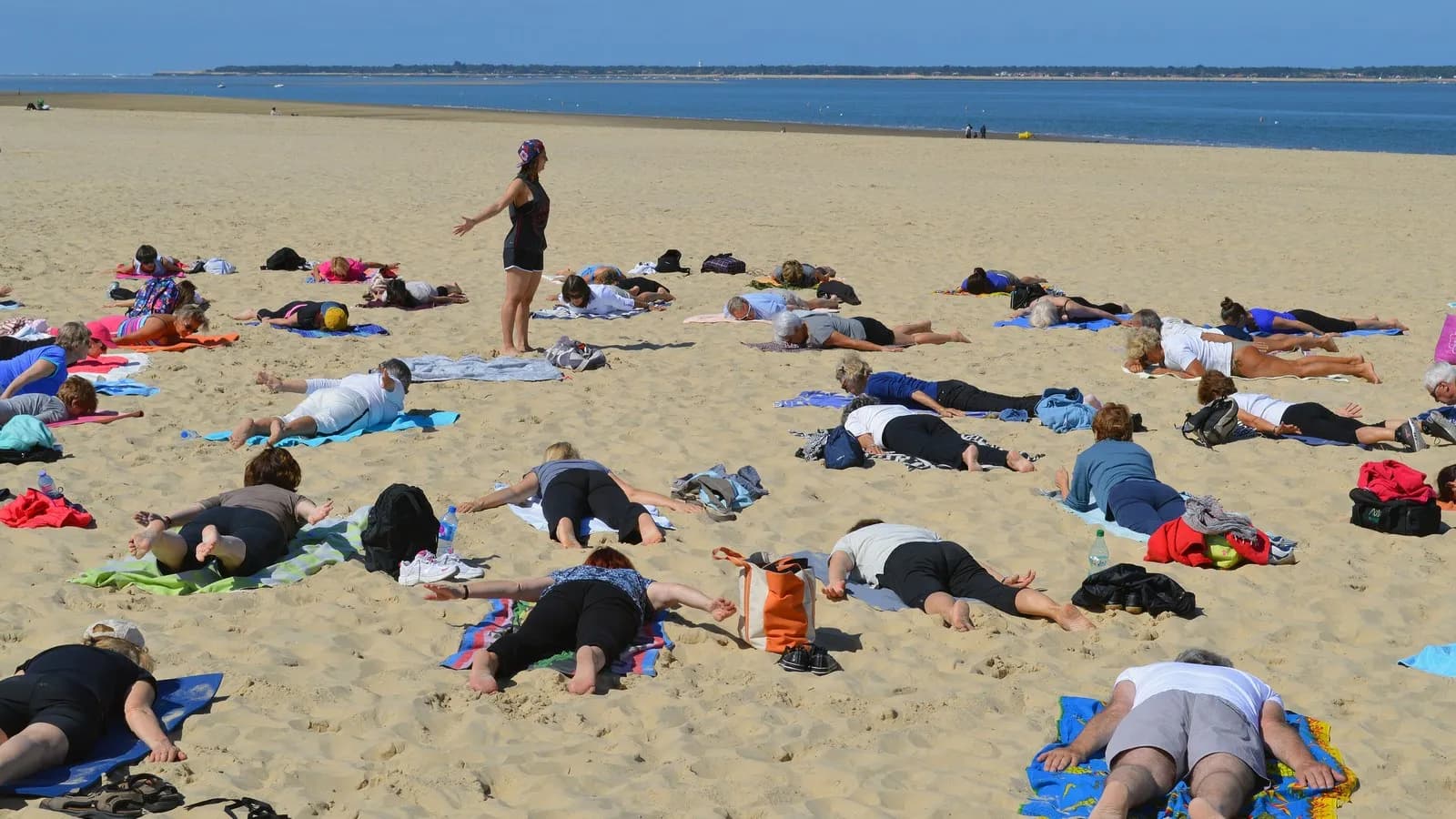
Yoga is now recommended in clinical guidelines for chronic low back pain in several countries, which is an unusual position for a practice that arrived from a religious tradition. It has earned that position, and the size of the effect is smaller than most people assume.
What the best evidence says
The reference point is a Cochrane review of yoga for chronic non-specific low back pain, covering 21 trials and 2,223 participants.
Its conclusion, in the reviewers' own careful register: after three months, yoga is probably better than not exercising for improving pain and back-related function, and the improvements are small. In every included study the yoga was designed specifically to treat back pain and the classes were led by experienced practitioners, which is an important qualification. It is not evidence about dropping into any class you find nearby.
Compared against other forms of exercise rather than against nothing, yoga generally performs about the same. That is the finding that tends to get lost. The honest summary is that yoga is a decent form of therapeutic exercise, and that most of its benefit for back pain appears to be the benefit of doing appropriate exercise at all.
This is not a criticism. Most people do not do appropriate exercise, and a practice that people enjoy enough to continue is worth a great deal more than an optimal programme they abandon in a fortnight.
The injuries
Yoga is often described as low-impact and safe, which is broadly true and not the same as harmless.
An analysis of United States emergency department data estimated approximately 29,590 yoga-related injuries presenting between 2001 and 2014. The rate rose from 9.55 per 100,000 participants in 2001 to 17.01 per 100,000 in 2014. The trunk was the most frequently injured region at 46.6 percent, and sprains and strains were the commonest injury type at 45.03 percent.
Serious injury remained rare, at under 0.02 percent.
The finding that deserves the most attention is about age. Over the same period, the rate of yoga injuries among adults aged 65 and over rose more than eightfold. That is partly because far more older adults took up yoga, and it is also a reminder that a practice marketed as gentle is being taken up by people whose tissue tolerance is not what it was, often in classes designed for people whose tissue tolerance is fine.
What actually causes them
Not exotic postures, mostly. The trunk dominating the injury statistics points at the ordinary stuff: forward folds and twists performed with a rounded lumbar spine, and end-range positions held under load.
Specific things worth knowing. Headstand and shoulderstand load the cervical spine in a way that has produced serious injuries and are the postures most often omitted by cautious teachers. Deep forward folds with straight legs are a common route to hamstring tendon irritation at the sitting bone, which is slow to recover. Hot yoga's added flexibility is partly a temperature effect on tissue compliance rather than a real gain in range, which makes it easier to go past your usable limit without noticing.
How to get the benefit without the visit
Tell the teacher what is wrong with you before the class rather than after. A competent teacher will change what they ask of you; a teacher who does not want to know is telling you something useful.
Treat pain as information. The instruction to breathe through discomfort is reasonable for the discomfort of effort and unreasonable for sharp, joint-line or nerve-type pain. Those are different sensations and the distinction is learnable.
Be sceptical of range of motion as a goal in itself. Getting further into a posture is not the same as getting better, and for people with naturally lax joints, chasing depth is precisely the wrong direction.
If you are over 65, or returning after a long gap, start in a class that says so. The eightfold rise in that age group is the clearest signal in the data.
The breathing side of the practice, which has its own evidence and its own genuine hazards, is in our piece on slow breathing, and the meditative side, including an adverse event literature that is rarely mentioned, is in this one.
Published in The Outspoken Digest
Editorial desk
Outspoken Digest Health DeskMedicine, public health and the research behind the headlines, read carefully.
Newsletter
The Digest, in your inbox
One edition, sent when it is ready. No noise, and your address is never passed on.
Read Next
More Health →
Cochrane Review Finds Medical Cannabis Has No Clear Benefit for Insomnia, With Weak Evidence Either Way
Oct 13, 2026/2 min read

Lancet Commission Names 17 Threats to Global Health Through 2100, With Obesity the Largest by Burden
Oct 12, 2026/2 min read


FDA Approves Pritelivir for Herpes Lesions That Resist Standard Antivirals in Immunocompromised Adults
Oct 10, 2026/2 min read