Static Apnea: How People Hold Their Breath for Eleven Minutes
The records look impossible until you learn what the body does when the face hits cold water. Most of the gain is physiological adaptation and relaxation, not lung size, and one record category is not comparable to the others.
Tuesday, August 11, 2026/3 min read
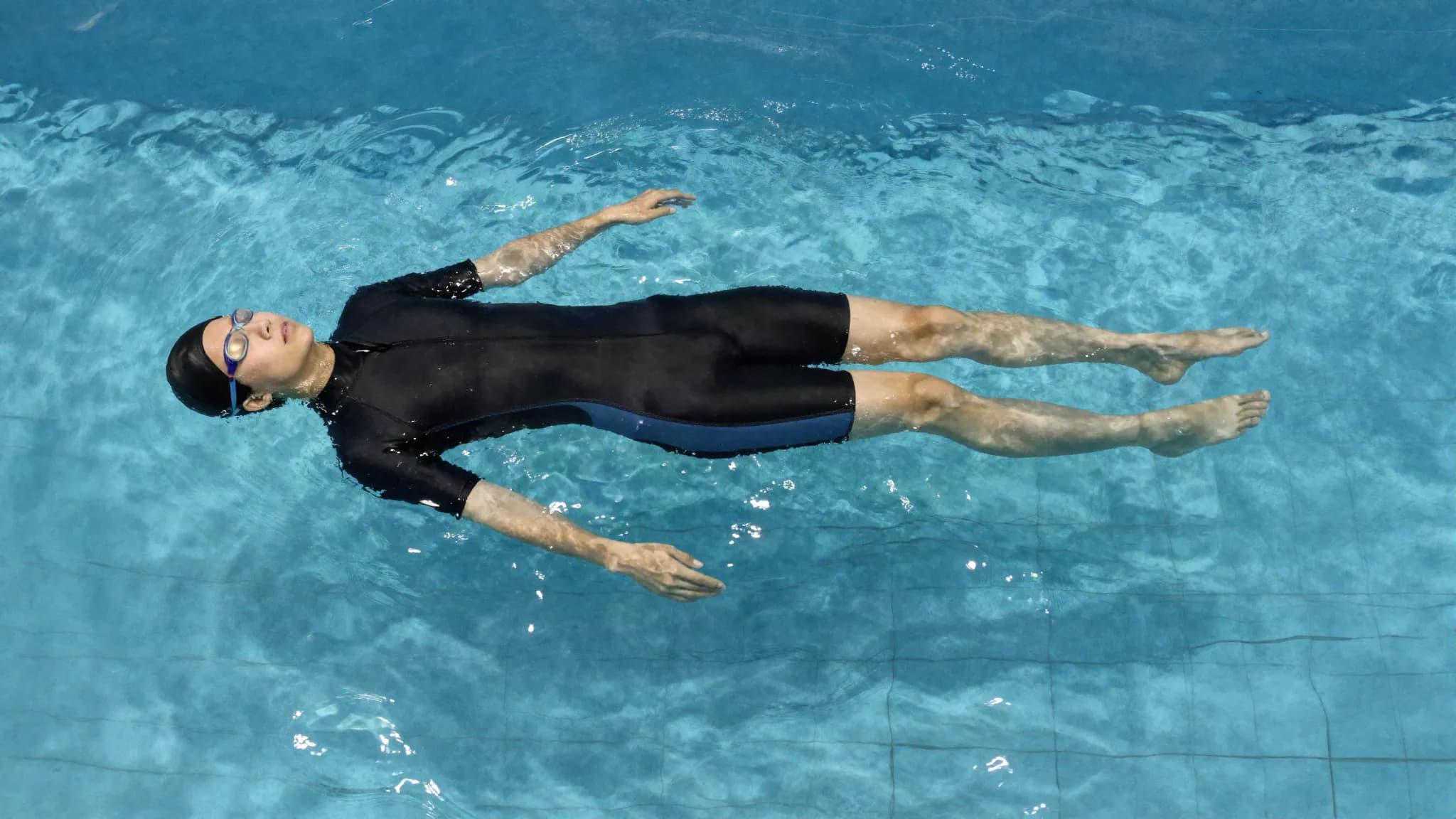
Static apnea is the simplest discipline in freediving and the strangest to watch. The athlete floats face down in a pool and does nothing. That is the whole event.
The times are what make it interesting. Official records in the discipline sit above eleven minutes for men and above nine for women, against an untrained adult's typical thirty to sixty seconds.
The gap looks impossible. It is mostly explicable.
The one record that is not the same sport
Deal with this first, because it distorts every conversation.
You will see figures well over twenty minutes attached to breath-hold records. Those are oxygen-assisted attempts, where the athlete breathes pure oxygen for a period beforehand, saturating the blood and lungs far beyond what air allows.
That is a different physiological event, categorised separately, and it is not what competitive static apnea measures. Freediving federations record static apnea performed after breathing normal air.
Comparing the two is like comparing a cycling record to a motorbike one. Both are real; only one is the sport.
The dive reflex does most of the work
Humans retain a set of reflexes shared with diving mammals, triggered mainly by cold water on the face combined with breath-hold.
Bradycardia. Heart rate falls, in trained athletes sometimes to half of resting or below. A slower heart consumes less oxygen.
Peripheral vasoconstriction. Blood vessels in the limbs narrow, shunting blood towards the heart, lungs and brain. The extremities are effectively taken off the supply.
Spleen contraction. The spleen squeezes out a reserve of red blood cells, measurably raising oxygen-carrying capacity for a period.
These are not learned so much as unlocked, and training makes them arrive faster and stronger. This is also why cold water on the face matters, and why a dry breath-hold on a sofa is always shorter than the same person's time in a pool. The reflex itself is worth understanding in full.
Relaxation beats lung capacity
The intuitive assumption is that big lungs win. They help at the margin, and most of the top performers do have above-average vital capacity, but it is not the main variable.
Oxygen consumption is. A tense athlete with large lungs will be beaten by a relaxed one with average lungs, because muscle tension, elevated heart rate and mental agitation all burn oxygen at a rate that dwarfs the difference in storage.
Which is why the training looks like meditation rather than exercise. Elite static is largely the skill of remaining calm while your body insists, with increasing force, that you breathe.
The contractions are not the end
Somewhere around the halfway point the diaphragm begins to contract involuntarily. To a beginner this feels like the limit. It is not: it is carbon dioxide reaching the threshold that triggers the urge to breathe, and it typically arrives with a great deal of oxygen still available.
Trained athletes spend the majority of a maximal static in the contraction phase. Learning that contractions are a milestone rather than a deadline is the single biggest early improvement most people make, and it is what CO2 tables are built to train.
The danger, stated plainly
Static apnea is the discipline in which people most often die, and almost never in competition.
They die alone, in swimming pools, practising. A blackout in static is survivable within seconds if someone lifts your face clear of the water. Unattended, it is a drowning.
Competitive static has a safety diver, a judge, surface protocol and immediate intervention. That is why the records are set safely and the fatalities happen at leisure centres.
The other lethal shortcut is hyperventilation, which delays the urge to breathe without adding oxygen and therefore removes the warning before blackout: the mechanism is set out here.
Never practise breath-holding in water alone. Never hyperventilate first. Those two rules cover the overwhelming majority of deaths in the sport.
What is realistic
A healthy adult doing structured dry training with a coach will commonly reach three to four minutes within a few months, and many reach five. That is a very large multiple of where they started and requires no unusual physiology.
It also requires no water until you are supervised. Start dry, start with tables, and add the pool only with someone trained watching you.
This article is general information, not medical advice or a substitute for certified instruction.
Published in The Outspoken Digest
Editorial desk
Outspoken Digest Diving DeskCovers freediving, recreational and technical diving, dive medicine and the incidents the sport learns from.
Newsletter
The Digest, in your inbox
One edition, sent when it is ready. No noise, and your address is never passed on.
Read Next
More Diving →
Black Swallower Filmed With a Hugely Swollen Belly 1,259 Metres Down Off Trinidad and Tobago
Oct 13, 2026/2 min read
Playing Recordings of a Healthy Reef Drew More Coral and Fish Larvae to Artificial Structures Off Hawaii
Oct 9, 2026/3 min read
Blacktip Sharks Can Hear a Sound From Nearly 250 Feet Away and Swim Straight Toward or Away From It
Oct 1, 2026/2 min read
A Sea Turtle Species Never Recorded Nesting in the United States Laid Eggs on a Southern California Beach
Oct 1, 2026/2 min read