PADI, SSI, NAUI, IANTD or GUE: Which Certification Actually Matters
The agencies argue endlessly and the accident data barely distinguishes between them. Here is what genuinely differs, what does not, and the questions to ask a dive centre before you pay.
Thursday, August 13, 2026/4 min read
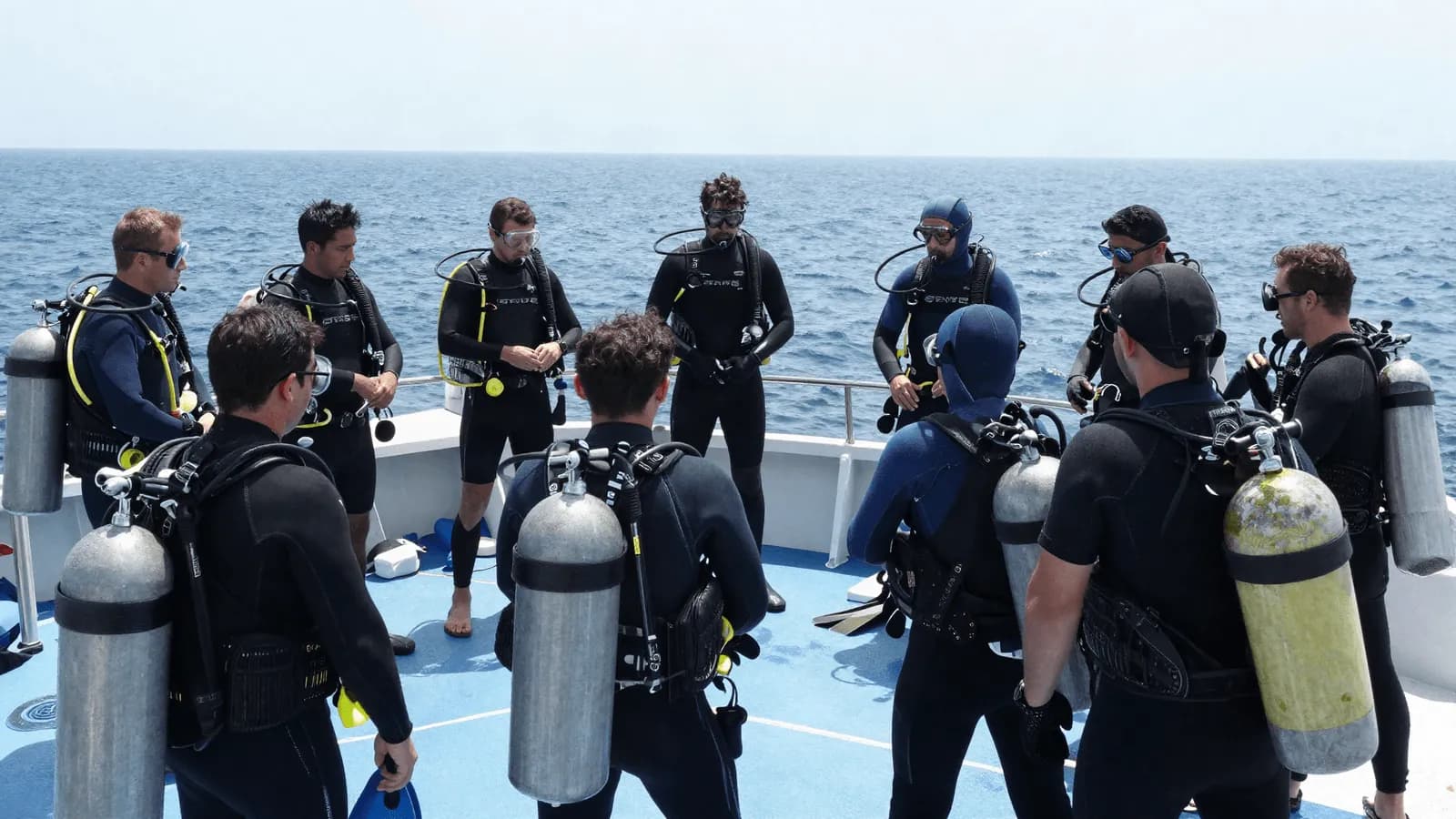
Ask which agency to learn with and you will get an argument rather than an answer. It is one of diving's oldest arguments, and most of it is misdirected, because the variable that dominates your outcome is not printed on the card.
Here is the comparison, done honestly.
The part nobody disputes
All the mainstream recreational agencies work within the same internationally recognised standards framework. Entry-level qualification depth is 18 metres. Certifications are cross-accepted, so you can learn with one and continue with another. Operators worldwide will take any of these cards.
The fatality data does not sort meaningfully by agency. What it sorts by is health, currency, and whether the dive was inside the diver's training. That is the finding, and everything below is secondary to it.
Where they genuinely differ
PADI
The largest, the most available, and the most standardised. A franchise system with materials in the most languages and a centre in nearly every dive town on earth. Modular progression, strong marketing, lighter entry-level theory than NAUI or GUE.
Best for: certifying anywhere, on any schedule, and continuing while travelling. Detail in our piece on what PADI standards require.
SSI
The main alternative, built around the dive centre rather than the individual instructor. Free digital materials, a good digital logbook, and an advanced rating that requires logged dives rather than only instruction. Strong technical and freediving divisions.
Best for: divers who want the materials at no cost and a record of experience that means something. Detail in our piece on the SSI system.
NAUI
The oldest, a non-profit owned by its instructors, and explicit that standards are a floor the instructor should exceed. Heavier academics, earlier rescue content, deep roots in scientific, academic and public safety diving. Less available in resort markets.
Best for: divers who want theory and have found an instructor they rate. Detail in our piece on NAUI.
IANTD
Technical first, recreational second. The agency that fought the nitrox argument and built much of the mixed gas and rebreather curriculum. Theory-forward, flexible about equipment configuration.
Best for: decompression and rebreather progression without a prescribed kit doctrine. Detail in our piece on IANTD.
GUE
Standardised equipment, standardised gas, team-based procedure, fitness requirements, and courses you can fail. Small, hard to access, and the most internally consistent system in diving.
Best for: divers who dive regularly with the same team and want to be measured. Detail in our piece on GUE.
The three things that actually predict whether you end up a good diver
1. Your instructor
Within any agency, the range between an excellent instructor and a bored one is far wider than the range between agencies. This is not a diplomatic hedge. It is the consistent observation of everyone who has worked across multiple systems.
2. Your ratio and pace
Four students to one instructor over five days produces a different diver from eight students over three days. The standards permit both. Ask which you are getting.
3. How often you dive afterwards
Currency beats certification level, by a distance. A diver with an entry-level card and forty dives a year is safer than an advanced diver with four dives since 2019. Skills decay, and the first to go are exactly the ones you need in an emergency.
The questions to ask before you pay
- How many students per instructor, and is that a cap or a hope?
- Over how many days, and how many hours in the water each day?
- Who specifically is teaching me, how long have they taught, and can I speak to them?
- Are skills taught neutrally buoyant, or kneeling on the bottom?
- What is the plan if I need an extra session, and does it cost more?
- Is there emergency oxygen on the boat, and where is the nearest chamber?
The last one is not paranoia. Chamber coverage is thinner than people assume across much of the region, as we found looking at recompression facilities in the Red Sea and Gulf.
Two practical recommendations
First, take Rescue Diver, whichever agency you are with. It is the course that changes how people dive, because it is the first one that is not about you.
Second, if your buoyancy is not good, fix that before adding depth. Every advanced qualification you stack on top of poor buoyancy inherits the problem, and it is the root of more incidents than any exotic failure. GUE Fundamentals is the sharpest tool for this regardless of your affiliation.
The summary
Choose the centre. Interrogate the instructor. Then accept whichever logo they print, because it will not be the thing that keeps you alive.
What will is currency, honest self-assessment about what your training actually covered, and the discipline described in the DAN safety guidance.
Published in The Outspoken Digest
Editorial desk
Outspoken Digest Diving DeskCovers freediving, recreational and technical diving, dive medicine and the incidents the sport learns from.
Newsletter
The Digest, in your inbox
One edition, sent when it is ready. No noise, and your address is never passed on.
Read Next
More Diving →
Black Swallower Filmed With a Hugely Swollen Belly 1,259 Metres Down Off Trinidad and Tobago
Oct 13, 2026/2 min read
Playing Recordings of a Healthy Reef Drew More Coral and Fish Larvae to Artificial Structures Off Hawaii
Oct 9, 2026/3 min read
Blacktip Sharks Can Hear a Sound From Nearly 250 Feet Away and Swim Straight Toward or Away From It
Oct 1, 2026/2 min read
A Sea Turtle Species Never Recorded Nesting in the United States Laid Eggs on a Southern California Beach
Oct 1, 2026/2 min read