Somebody Finally Measured the Mashrabiya, and the Number Is 2.4 Degrees
Traditional Arab screens get praised in general terms and tested rarely. Field studies in hot climates put a figure on what they do, and the figure is real, useful, and smaller than the romantic version of the story suggests.
Saturday, August 22, 2026/4 min read
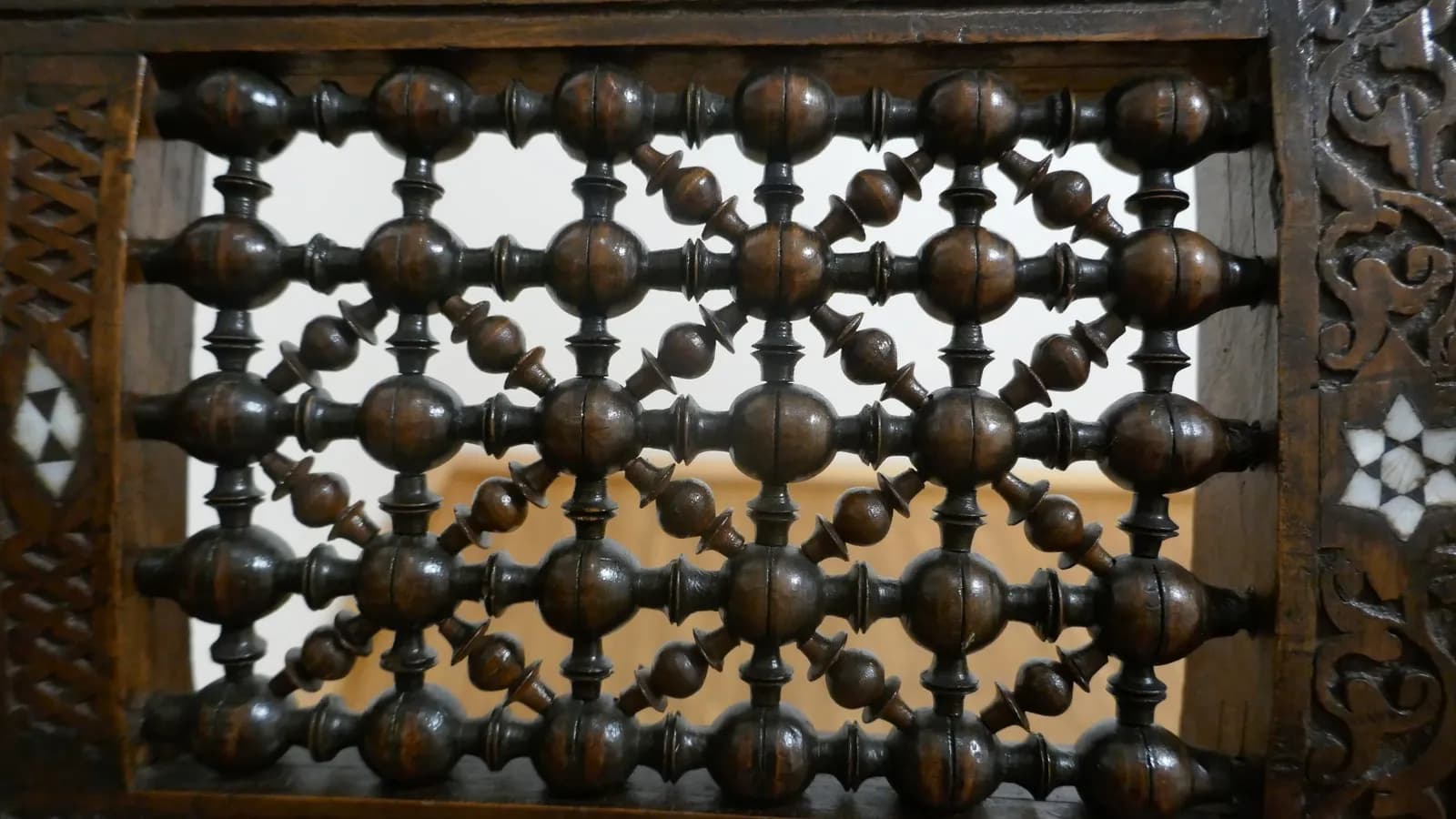
There is a familiar claim about building in the Gulf, and it is usually made without numbers: before air conditioning, people knew how to keep a house cool, and modern architecture forgot. The mashrabiya, the interlaced wooden screen found in the old quarters of Jeddah, Makkah, Baghdad, Cairo, Damascus and Tunis, is the object most often held up as proof.
The claim is broadly true. It is also, in the form it is usually made, unfalsifiable, which is a problem if you want to actually build something. So it is worth looking at what happens when researchers put instruments in a room and measure.
What do the field studies show?
A measurable temperature difference, and a smaller one than the rhetoric implies.
Experimental work in hot climates found that opening a mashrabiya allowed more airflow into a room during the day and reduced the indoor temperature by up to 2.4 degrees Celsius compared with the same screen closed. That is the headline figure, and it is a real effect produced by a wooden screen with no moving parts and no energy input.
The same work found that a closed mashrabiya reduced the flow of hot air into rooms during the afternoon, holding indoor temperatures at around 35.4 to 35.8 degrees.
Read that second number carefully, because it is the honest part of the story. Thirty five degrees indoors is not comfortable by any modern standard. It is better than outside, which in a Gulf summer afternoon may be ten degrees hotter, and it is not a room anyone today would choose to work in.
So does the screen replace air conditioning?
No, and pretending otherwise is how good ideas get discredited.
What the mashrabiya does is reduce the load. It shades the opening, it filters direct solar gain, and it allows air movement without allowing full sun, which are three separate jobs done by one element. A cooling system that starts from 35 degrees rather than 45 is doing far less work, and it is doing that work for the whole life of the building.
The system-level figure is the more persuasive one. Buildings that combine passive strategies, wind towers and mashrabiyas among them, have been found to use around 40 per cent less energy than conventionally designed equivalents. That is not a marginal saving. It is the difference between a plant that has to be oversized and one that does not.
Why was it always more than a screen?
Because it was never used alone.
The studies that produced these figures tested the mashrabiya integrated with other techniques: thermal mass, water pots placed in the airflow, water spray, and damp cloth. Air passing over water gives up heat to evaporation, and air passing through a dense screen into a heavy masonry room meets a surface that has been cooling all night.
This is the point most often missed when the element is borrowed for a contemporary facade. A perforated screen bolted to a glass curtain wall with a chilled interior behind it is a decorative reference to a system, not the system. The screen was one component of an assembly that included mass, water, orientation, courtyard geometry and a night ventilation routine. Remove the assembly and you keep the pattern and lose most of the physics.
What should a designer take from this?
Three things, in order of how much they matter.
Shade the opening before you cool the room. The cheapest heat to remove is the heat you never admitted. Every serious passive strategy is a variation on this.
Thermal mass and night ventilation are a pair. Mass without a way to purge stored heat overnight makes a building worse, not better, which is why the traditional versions of these houses were operated, not just built. Somebody opened and closed them.
Treat the 2.4 degrees as a design margin, not a solution. It is the kind of number that lets you specify a smaller system, run it at a lower duty, and keep a building habitable during a power failure. Those are large practical benefits that do not require anyone to pretend the room is comfortable.
Why does this argument keep resurfacing?
Because cooling is now one of the largest and fastest growing energy demands in the region, and because the alternative to measuring is nostalgia.
Vernacular architecture in the Gulf earned its reputation honestly: it responded to climate with the materials available and without the option of mechanical rescue. But treating it as a complete answer flatters the past and helps nobody build. Treating it as a set of testable techniques, with published figures attached, makes it usable, which is what the research does and what the folklore does not.
The practical version of this question, for anyone designing here now, is set out in designing for forty five degrees, and the scale at which it is being ignored or applied is visible across a decade of Gulf skylines. For a household rather than an architect, the same physics shows up in the problem of sleeping through a Gulf summer.
Published in The Outspoken Digest
Newsletter
The Digest, in your inbox
One edition, sent when it is ready. No noise, and your address is never passed on.
Read Next
More Design →
Jaguar Type 01 Arrives as a 1,030hp Electric Grand Tourer With No Rear Window and the Concept's Look Intact
Oct 13, 2026/2 min read
Drew Henry Reset Courreges for Spring 2027 With a Pared-Back Debut at the Palais de Tokyo
Oct 1, 2026/3 min read
Choosing Light Bulbs: Lumens, Kelvin and Colour Rendering Explained, Room by Room
Sep 21, 2026/3 min read