The Greenest Building Is Usually the One Already Standing, and the Arithmetic Is Not Close
Building a new home of the same size can produce up to thirteen times the embodied carbon of refurbishing the old one. That number has started appearing in planning decisions, which is how a technical argument becomes a policy.
Tuesday, August 18, 2026/3 min read
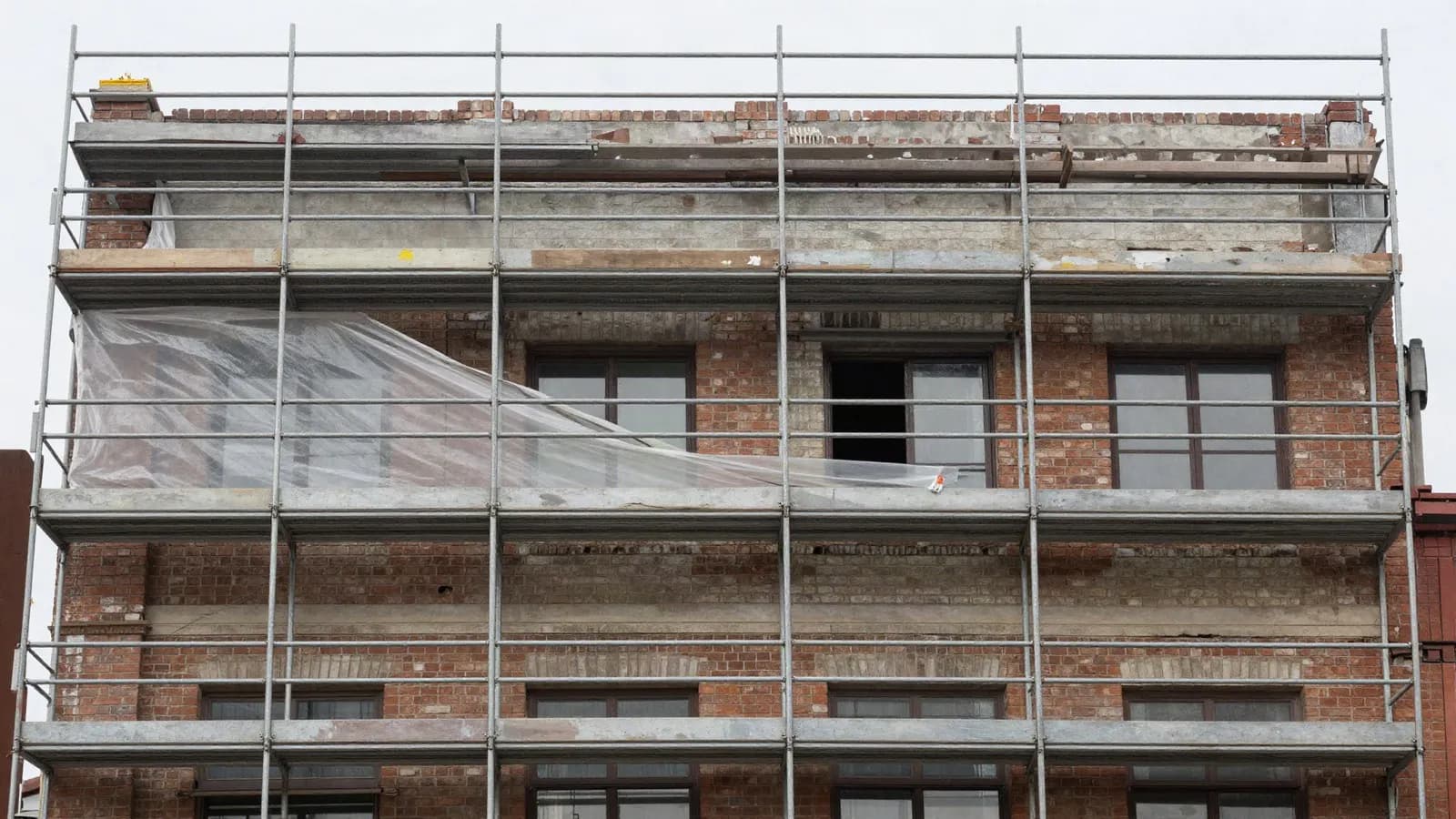
Sustainability in architecture spent thirty years being measured at the wrong end. The question was how much energy a building would use once it was finished, which meant a very efficient new building always beat an inefficient old one, and demolition was the responsible choice.
Counting the carbon spent to put the thing up changes the answer, and in most cases it reverses it.
What is embodied carbon?
Everything emitted before anyone switches a light on.
It is the cement, the steel, the aluminium, the glass, the transport, the demolition of whatever stood there before, and the disposal of that rubble. It is spent once, up front, and no amount of good operational performance afterwards recovers it. The building either avoided those emissions or it did not.
Operational carbon, by contrast, is spread over decades and falls as the electricity grid decarbonises. This is the asymmetry that reframed the argument: operational emissions are a problem that partly solves itself over time, and embodied emissions are a bill paid immediately and permanently.
How large is the difference?
Larger than most people expect, and the case studies are more persuasive than the averages.
Historic England's analysis found that building a new home of the same size can produce up to thirteen times the embodied carbon of refurbishing an existing one. In individual projects, one adaptive reuse scheme reported an 82 per cent reduction against an equivalent new building, and another working with a 1960s structure reported 68 per cent.
A whole-life comparison over a sixty year horizon makes the point differently. In one assessment, the construction emissions from refurbishment came to 1.2 tonnes of CO2 equivalent, about 2 per cent of the building's total emissions across its life. Demolition and new construction came to 16.35 tonnes, about 28 per cent.
Even a full refurbishment, which is the expensive end of reuse, came out roughly 23 per cent better than new construction, and a light refurbishment about 26 per cent better.
Where does the reuse case get weaker?
It is not universal, and pretending otherwise damages the argument.
A structure that is genuinely unsound, contaminated, or built to a floor-to-ceiling height that cannot accommodate modern services is a poor candidate. So is a building on a site where reuse locks in a density far below what the location can support, because the carbon of the building is not the only thing being counted when a city is short of housing.
There is also an honest operational trade. Some old buildings are very hard to insulate without ruining what makes them worth keeping, and a deep retrofit that fails to reach a decent standard leaves a building that is expensive to run for another sixty years. The answer to that is better retrofit, not demolition by default, but it is a real engineering problem rather than a rhetorical one.
Why is this suddenly showing up in decisions?
Because a regulator started asking for the number.
The Greater London Authority requires major projects to calculate and reduce whole-life carbon emissions, which turns embodied carbon from a thing architects argue about into a thing applicants must document. Once a figure has to be produced and defended, the calculation starts changing the design rather than justifying it afterwards.
That is the mechanism worth watching. The technical case for reuse has been available for years. What moved it was a disclosure requirement, the same way a code category unlocked tall mass timber.
What does this mean for the Gulf?
The region's building stock is young, which cuts both ways.
There is less to conserve than in a European city, and the emotional pull of a hundred year old warehouse is not available for a 1990s commercial block. But young stock is exactly what gets demolished most casually, and the towers going up across Gulf skylines over the past decade represent an enormous quantity of embodied carbon that is now sunk.
The reuse argument here is less about heritage and more about the second and third lives of buildings that are only twenty five years old. It is also a design brief rather than a preservation one, which is the spirit behind the reuse pavilion projects that treat salvaged material as a starting point.
The uncomfortable part
Reuse is harder work for less fee, on a slower programme, with more risk of surprises once you open a wall.
That is the actual obstacle. It is not that the profession does not know the numbers. It is that the incentives run the other way, and until reuse is easier to finance and faster to consent than replacement, the arithmetic will keep losing to the process.
Published in The Outspoken Digest
Newsletter
The Digest, in your inbox
One edition, sent when it is ready. No noise, and your address is never passed on.
Read Next
More Design →
Jaguar Type 01 Arrives as a 1,030hp Electric Grand Tourer With No Rear Window and the Concept's Look Intact
Oct 13, 2026/2 min read

Drew Henry Reset Courreges for Spring 2027 With a Pared-Back Debut at the Palais de Tokyo
Oct 1, 2026/3 min read

Choosing Light Bulbs: Lumens, Kelvin and Colour Rendering Explained, Room by Room
Sep 21, 2026/3 min read