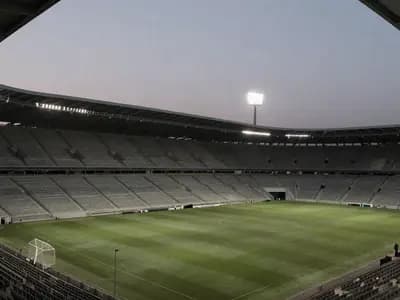
Fourteen teams instead of twelve, a season running from 4 September to 23 May, and twenty-six league games where there were twenty-two. Growing a league is easier than filling it.
The Premier League, La Liga and Serie A close on 1 September. The Saudi Pro League stays open until 12 October. Those six weeks are the most important structural fact in this transfer market.
Mixed doubles is played over three days in the week before the singles begin, with sets to four games and a draw of sixteen. Year two adds qualifying, which is a quiet admission about year one.
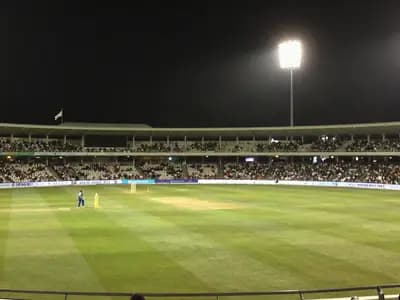
Fifteen matches, eight teams, one ground. The Women's T20 Asia Cup runs at Dubai International Stadium from 28 August, and the single-venue format is a deliberate choice rather than a compromise.
Arsenal open against Coventry on Friday night. The interesting number is not the scoreline but the gap: a month and two days between the end of a 48-team World Cup and the start of a 380-game league season.
The number on the broadcast graphic is simpler than it looks and more limited than its critics admit. What xG measures, what it cannot see, and how to read it over a season rather than a night.
With the season opening on 13 August, outgoing transfers outnumber incoming ones by a wide margin and summer spending sits far below the headline years. That is a strategy shift, not a slowdown.
August produces more football news than August contains. A short field guide to which reports mean something, which are negotiating tactics, and why the same names circulate every year.
Manchester City paid 116 million for Elliot Anderson, then Chelsea went past it for Morgan Rogers. Both fees went to selling clubs inside the league, which is the part that matters.
Norris claimed his first victory of the 2026 Formula 1 season after a tense McLaren contest, traffic, strategy shifts and Oscar Piastri's late retirement.