Middle Eastern Rice Dishes, and How Each One Is Actually Built
Kabsa, machboos, maqluba, mujadara, freekeh. They look similar on a platter and are constructed by completely different methods. A guide to which is which and when to cook it.
Friday, August 14, 2026/3 min read
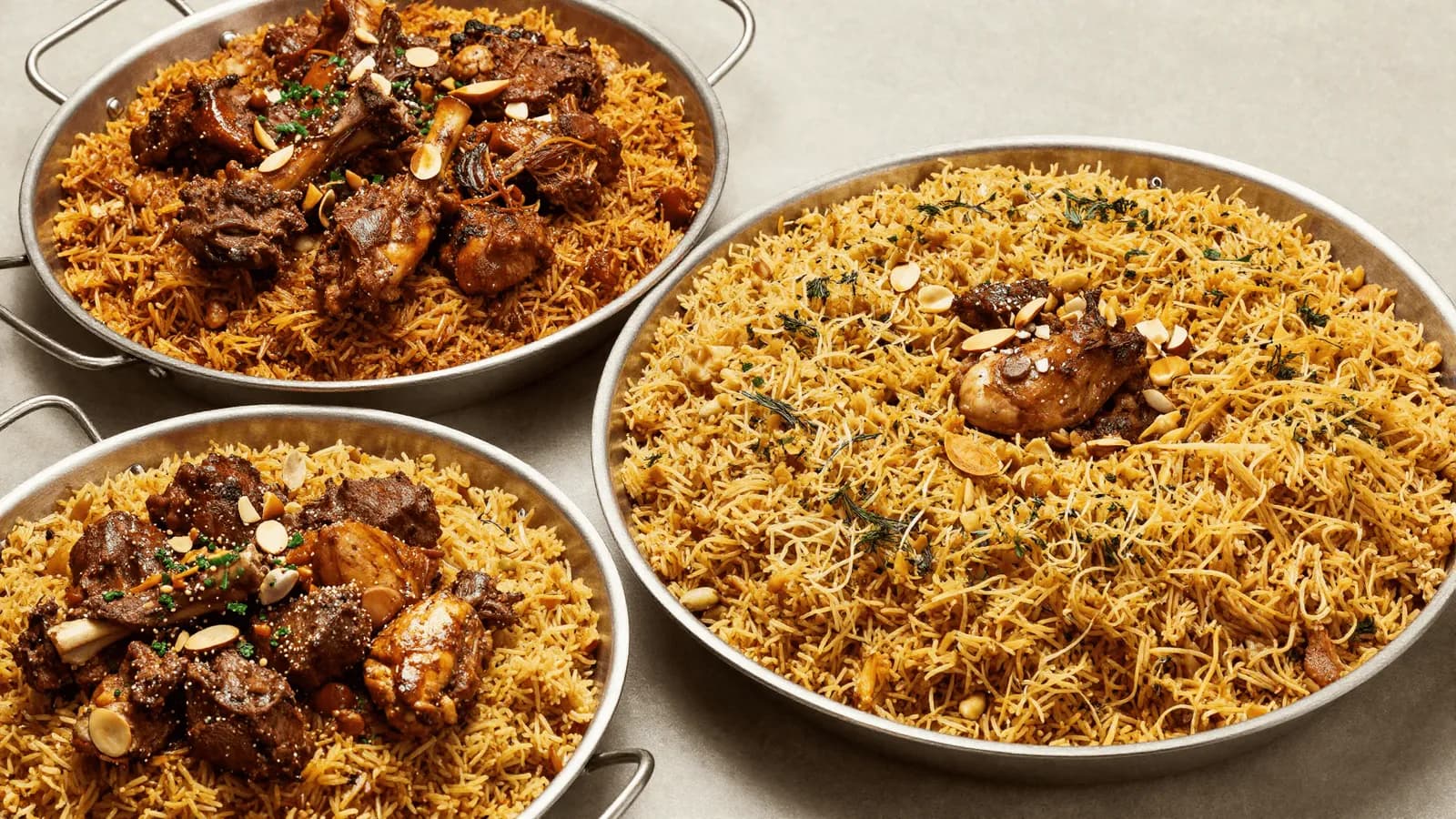
Rice in the Middle East is not a side dish. It is the structure of the meal, and the differences between the region's rice dishes are differences of method rather than of seasoning. Once you can see the method, the whole category becomes legible.
There are broadly four techniques, and almost every dish below is one of them.
The four methods
- Absorption in a meat broth. The meat is cooked first, the rice is then cooked in the resulting liquid. Flavour is uniform through every grain. This is kabsa and machboos.
- Layered and steamed. Rice is par-boiled separately, layered with a separately cooked sauce, then steamed together. Flavour stays deliberately marbled. This is biryani, and it is why biryani is not kabsa.
- Assembled and inverted. Fried vegetables and meat are packed into a pot, rice goes on top, and the whole thing is turned out upside down. This is maqluba.
- Cooked together from the start. Grain and pulse simmered in one pot. This is mujadara.
The Gulf
Kabsa
The Saudi national dish, and the reference point for the whole absorption family. Meat simmered with tomato, dried lime and baharat, rice cooked in the broth, meat returned on top, finished with almonds and raisins.
Cook it when you are feeding a table. Start with chicken kabsa for a weeknight, or lamb kabsa when you have the afternoon.
Machboos
The Bahraini, Kuwaiti and Qatari treatment of the same idea, and the differences are real if subtle: more loomi, often more turmeric, and frequently a final step where the pot is left to catch slightly at the base. See machboos.
Madrouba
Emirati, and a different thing entirely: rice cooked far past the point of separation until it collapses into a savoury porridge, beaten with butter. Comfort food, common in Ramadan. Our madrouba covers it.
Harees
Wheat rather than rice, but it belongs in the same conversation: grain and meat beaten to a smooth paste. See harees.
The Levant
Maqluba
Palestinian and Jordanian, and the most theatrical dish in the region. Fried aubergine or cauliflower and meat are packed into the base of the pot, rice on top, and after cooking the whole thing is inverted onto a platter so the vegetables become the crown.
The nerve required at the moment of inversion is the entire appeal. Our maqluba explains how to make sure it holds.
Mujadara
Rice and lentils cooked together, topped with a great quantity of deeply caramelised onions. Cheap, ancient, vegan, and one of the best things in Levantine cooking. The onions are the dish; take them further than feels sensible. See mujadara.
Freekeh
Green wheat, harvested young and roasted, so it tastes smoky before anything is done to it. Cooked like rice, used like rice. Our freekeh with preserved lemon pushes it towards a risotto.
Maftoul
Not rice at all but hand-rolled Palestinian couscous, cooked in broth and served with chicken and chickpeas. Included because it occupies the same place on the table. See maftoul.
Persian
Persian rice is its own discipline and the standards are higher. Rice is soaked, par-boiled, drained and then steamed with fat at the base of the pot to produce tahdig, the crisp golden crust that is fought over at the table.
It is the technical peak of rice cookery in the region, and it is the required accompaniment to ghormeh sabzi.
What actually goes wrong
Almost every failure with these dishes is one of four things.
- Not rinsing. Surface starch makes grains stick. Rinse until the water runs clear, every time.
- Not soaking. Twenty to thirty minutes for basmati. Unsoaked grains absorb unevenly and snap.
- Wrong liquid ratio. For soaked basmati cooked by absorption, roughly 1.5 parts liquid to 1 part rice by volume, not the 2:1 written on most packets, which assumes unsoaked rice.
- Lifting the lid. The steam is the cooking mechanism. Every look costs you.
Which to cook first
If you have never made any of these, start with mujadara. It is forgiving, cheap, needs no special ingredients, and teaches you what caramelised onion can do.
Then chicken kabsa, which teaches the absorption method. Then maqluba, when you are ready to turn a pot upside down in front of people.
Published in The Outspoken Digest
Editorial desk
Outspoken Digest Food DeskCooking, ingredients, restaurants and the economics of what ends up on the table.
Newsletter
The Digest, in your inbox
One edition, sent when it is ready. No noise, and your address is never passed on.
Read Next
More Recipes →
Swangy Tamarind Glazed Chicken Wings for the Flavour Replacing Swicy on Fast Food Menus
Sep 29, 2026/3 min read

Baked Apple Cider Doughnuts for a Cider Season That Peaked Earlier Than the Calendar Says
Sep 29, 2026/3 min read
An Obatzda Bavarian Beer Cheese Dip for the Final Stretch of Oktoberfest 2026
Sep 29, 2026/3 min read